Vincent Lingiari
Led 200 Gurindji stockmen and their families off a British cattle station and did not go back for nine years
Vincent Lingiari was born on Gurindji country in the Northern Territory and went to work at Wave Hill cattle station, owned by the British firm Vestey Brothers, as a boy. He became head stockman. Aboriginal workers at Wave Hill lived in humpies of corrugated iron, were paid in rations of flour, tea, sugar and tobacco with a few shillings on top, and had no recourse when their women were abused by white staff. In 1965 the federal arbitration commission ruled that Aboriginal stockmen should be paid equal wages, but delayed the order for three years.
On 23 August 1966 Lingiari led about 200 workers and their families off the station and set up camp by the Victoria River, later moving to Wattie Creek, which the Gurindji call Daguragu. Vestey's offered better pay and conditions; the strikers refused. Over the following months it became clear, to Lingiari first and then to the unions and city supporters who arrived with food and lawyers, that this was not a dispute about wages. The Gurindji wanted their country back. In 1967 they petitioned the governor-general for a lease of 500 square miles of it, and were refused.
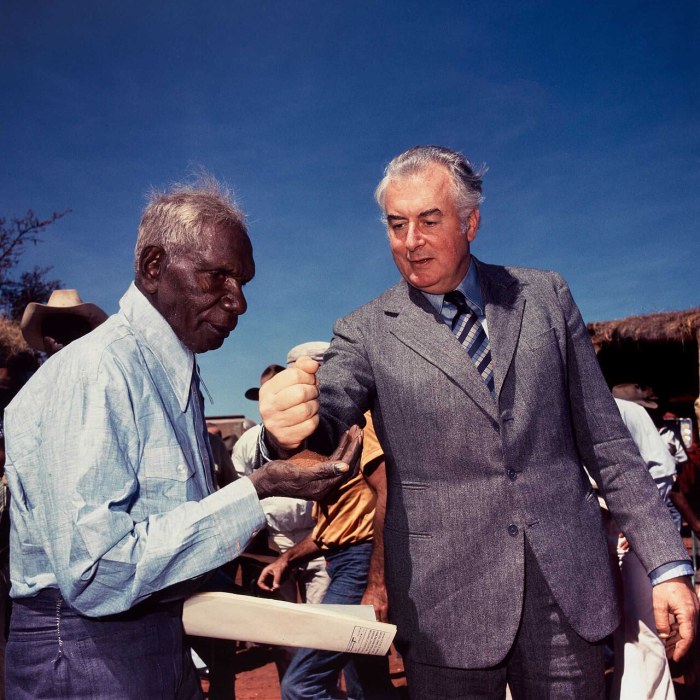
The walk-off lasted nine years, through bad seasons and threats. Lingiari toured the southern cities to raise support, speaking through interpreters. In 1975 the Whitlam government bought part of the lease from Vestey's and handed it back. At the ceremony at Daguragu the prime minister poured a handful of red soil into Lingiari's palm.
The following year the Northern Territory land rights act passed. He died in 1988.