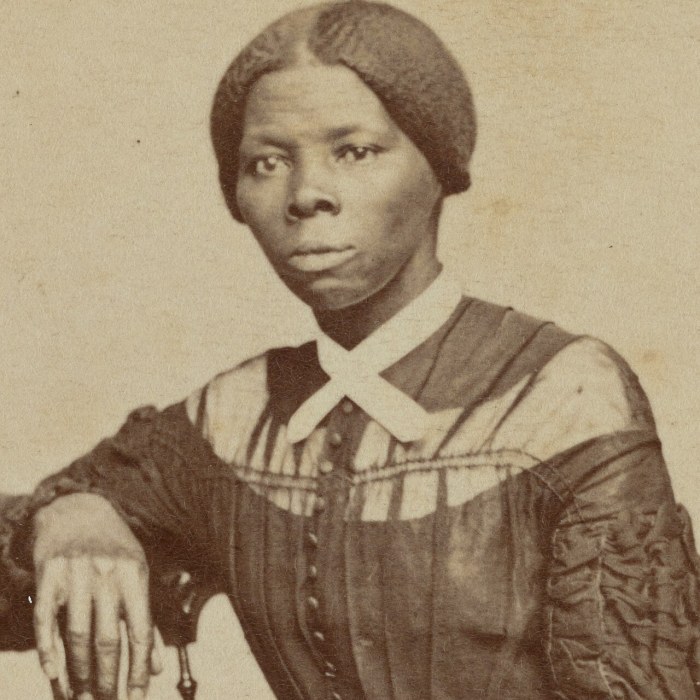
Harriet Tubman
Escaped slavery and then went back, again and again, to lead others out
Araminta Ross was born enslaved on a plantation in Maryland. As a girl she was hired out to households where she was beaten regularly. At about 13, an overseer threw a two-pound iron weight at another enslaved person; it hit her in the head and fractured her skull. For the rest of her life she suffered seizures, severe headaches and sudden sleeping spells.
In 1849, fearing she would be sold south, she escaped alone, travelling nearly 90 miles at night to Pennsylvania. "I looked at my hands to see if I was the same person," she later said of her first morning in a free state. She took her mother's name, Harriet, and her husband's surname, Tubman.
Most people who escaped never went back. Tubman returned around 13 times over the next decade, leading some 70 family members and others to freedom along the network of safe houses called the Underground Railroad. She travelled in winter when nights were long, carried a pistol, and was never caught. Slaveholders posted rewards for her capture; abolitionists called her Moses.
During the Civil War she served the Union Army as a nurse, scout and spy. In June 1863 she guided three gunboats up the Combahee River in South Carolina, an operation that freed more than 700 enslaved people in a single night. She was the first woman to lead an armed assault in the war. She spent her later years in New York, campaigning for women's suffrage and running a home for elderly Black Americans, and was buried with military honours.