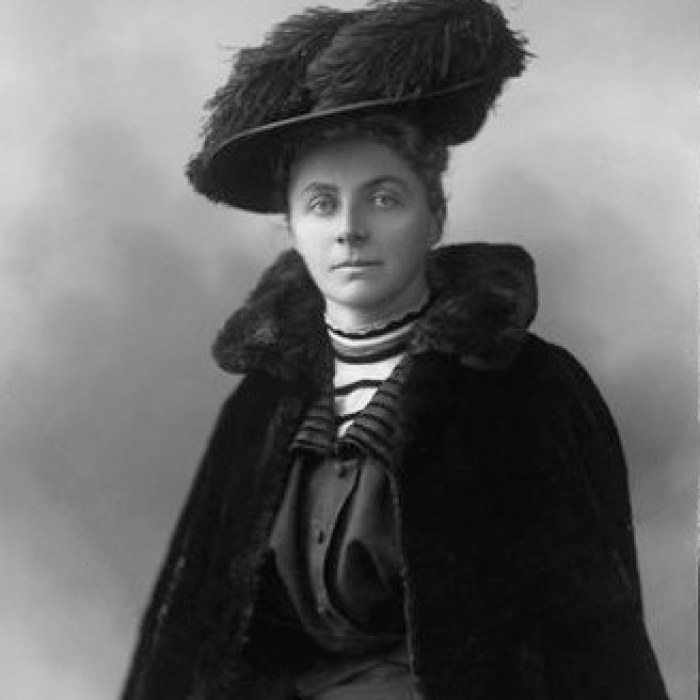
Emily Hobhouse
Exposed the British concentration camps of the Boer War and was deported for her trouble
Emily Hobhouse was born in St Ive in Cornwall, the daughter of a rector, and spent her twenties and most of her thirties looking after him. He died in 1895, when she was 35. She went to Minnesota to do welfare work among Cornish miners, became engaged to a man there, and broke it off after losing money on his schemes. She came home with nothing much to show for it.
When the Boer War began in 1899 she joined the opposition to it, and in 1900 set up a fund for Boer women and children displaced by the British policy of burning farms. She sailed to Cape Town alone in December 1900 and travelled by train to the camps where the families had been gathered. At Bloemfontein she found tents without beds, one tap for thousands of people, no soap, and measles and dysentery killing children daily. Her report to Parliament in 1901 caused an uproar. Politicians called her hysterical and pro-Boer; the government sent its own commission, led by Millicent Fawcett, which confirmed her findings. About 28,000 Boer civilians died in the camps, most of them children, along with many thousands of Black Africans held in separate camps.
When she tried to return in late 1901 she was refused permission to land and deported. After the war she went back anyway, setting up spinning and weaving schools for Boer women.
She died in London in 1926, largely forgotten in Britain. Her ashes were buried at the National Women's Monument in Bloemfontein.