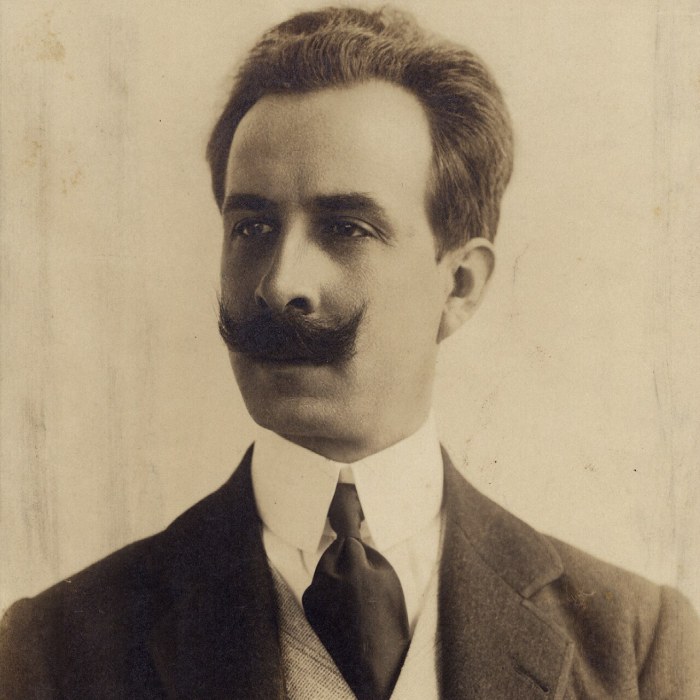
Carlos Chagas
Working from a railway carriage, he found a parasite, its insect carrier and a new disease, all by himself
Carlos Chagas was born in 1879 on a coffee farm in Minas Gerais, Brazil. His father died when he was four, and his mother, running the farm, wanted him to become an engineer. He hated it and switched to medicine in Rio de Janeiro, where he came under the influence of Oswaldo Cruz, the man building Brazil's first serious research institute.
In 1907 Cruz sent him to Lassance, a railway town in the interior where malaria was stopping construction. He lived and worked in a railway carriage. Local people told him about the barbeiro, a large blood-sucking bug that lived in the cracks of mud houses and bit sleepers on the face. Chagas dissected some and found a parasite in their gut, a trypanosome of a kind nobody had described. He sent bugs to Rio, where they infected laboratory monkeys.
He then went looking for the parasite in people, and in April 1909 found it in the blood of a feverish two-year-old girl called Berenice. Over the following years he worked out the parasite's life cycle, described the acute and chronic forms of the illness, including the heart damage that kills people decades later, and named the organism Trypanosoma cruzi after his teacher. Nobody before or since has described a new disease so completely alone.
He was nominated for a Nobel Prize twice and did not receive it. At home, rivals attacked the work as exaggerated, and it was neglected for decades. He died in 1934. The disease still affects several million people.