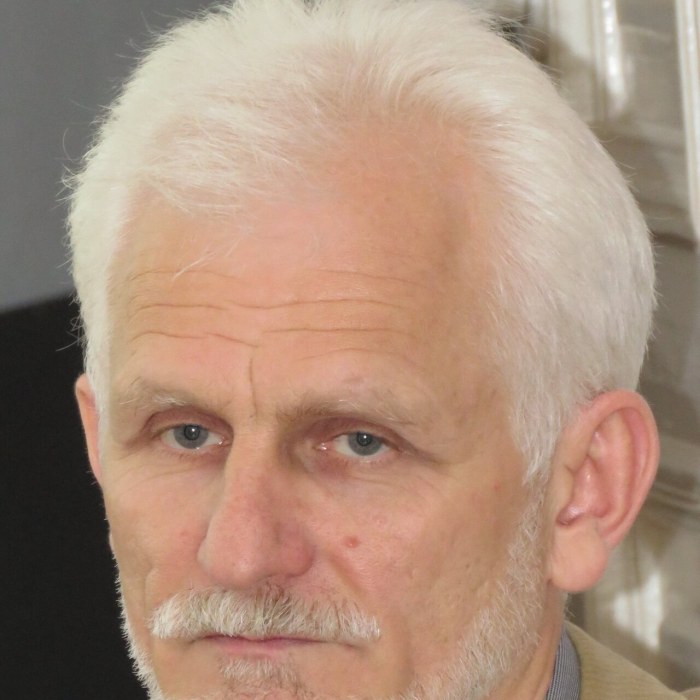
Ales Bialiatski
Founded Belarus's human rights centre and received the Nobel Peace Prize in a prison cell
Ales Bialiatski was born in Karelia, in northern Russia, to Belarusian parents who took him home to the industrial town of Svetlogorsk when he was small. He studied literature, wrote a dissertation on Belarusian prose and in 1989 became director of the Maxim Bahdanovich Literary Museum in Minsk. In the late Soviet years he was active in the movement for Belarusian language and independence, and was arrested for the first time in 1988.
In 1996, after President Lukashenko crushed street protests and sent hundreds to prison, Bialiatski founded a group called Viasna, meaning spring. Its work was practical: finding lawyers, sending parcels, paying fines, listing the names of detainees and observing elections. The state denied it registration, dissolved it in 2003, and it carried on without legal existence. Over the years it became the country's main record of who had been arrested and why.
In 2011 he was jailed for four and a half years for tax evasion, after the authorities obtained records of the foreign bank accounts through which Viasna received its funding. He was released in a 2014 amnesty. When mass protests followed the disputed election of 2020, Viasna documented the beatings and the tens of thousands of detentions, and in July 2021 he was arrested again. In March 2023 he was sentenced to ten years for smuggling and financing protest.
He was awarded the Nobel Peace Prize in October 2022, shared with two human rights organisations in Russia and Ukraine. His wife accepted it on his behalf. He was still serving his sentence in 2025.