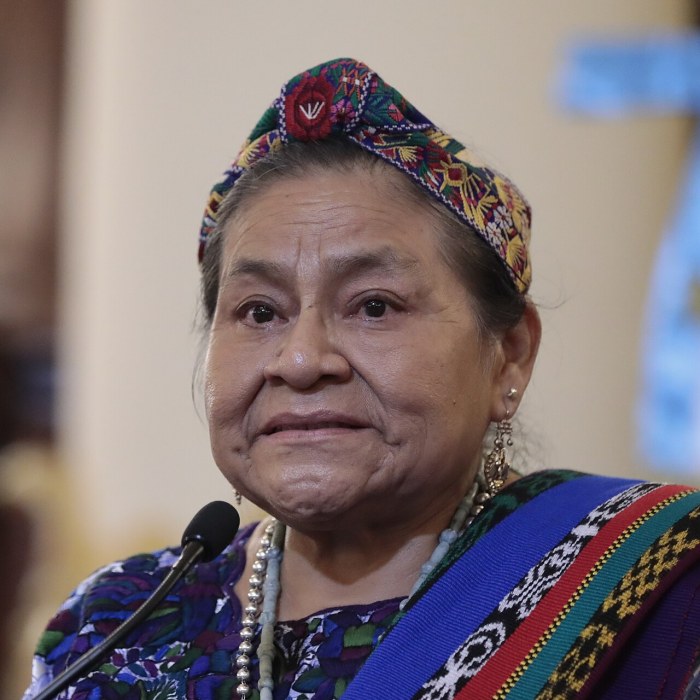
Rigoberta Menchú
Nobel laureate who exposed the massacre of Maya villages during Guatemala's civil war
Rigoberta Menchu was born into a poor Kiche Maya family in the Guatemalan highlands and worked from childhood picking coffee and cotton on plantations alongside her parents. Guatemala's civil war, fought between the army and leftist guerrillas from 1960, fell hardest on indigenous communities suspected of supporting the rebels, and Menchu's father was burned to death during a protest at the Spanish embassy in 1980, her mother was tortured and killed by soldiers, and a brother was murdered as well.
She fled into exile in Mexico and became a spokesperson for the indigenous population's suffering, learning Spanish, which was not her first language, to reach a wider audience. In 1983 she told her life story to an anthropologist for the book I, Rigoberta Menchu, which brought Guatemala's hidden war to international attention, though a later study by an American academic disputed some details of her account, a controversy she has always maintained does not change the underlying facts of the massacres.
In 1992, five hundred years after Columbus reached the Americas, she was awarded the Nobel Peace Prize for her work on indigenous rights, becoming the youngest laureate at the time and the first indigenous American to receive it.
She returned to Guatemala after the 1996 peace accords, ran unsuccessfully for president twice, and continues to campaign internationally on indigenous rights.