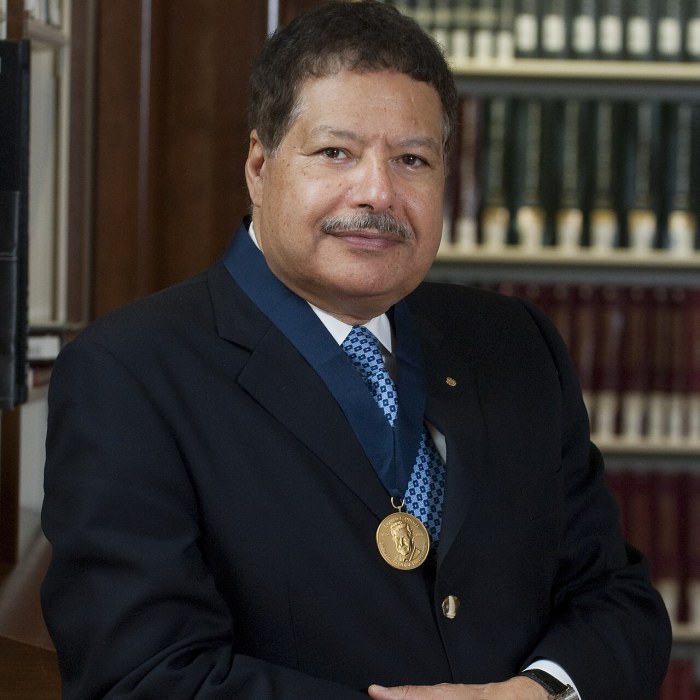
Ahmed Zewail
Built a camera fast enough to film atoms moving inside a chemical reaction
Ahmed Zewail was born in 1946 in Damanhur, Egypt, and grew up in the nearby town of Disuq, where his early interest in chemistry ran ahead of what the local schools could offer. He studied science at Alexandria University, then left for the United States in 1969 to pursue a doctorate, arriving with little money and only a rough grasp of English.
At the University of Pennsylvania and later the California Institute of Technology, he became fascinated by an old problem: chemical reactions happen so fast, in millionths of a billionth of a second, that no instrument could watch atoms rearrange themselves as bonds broke and formed. Through the 1980s he developed femtosecond spectroscopy, using extremely short pulses of laser light like a strobe, to freeze these transformations frame by frame.
The technique, which he called femtochemistry, let scientists observe the actual mechanics of a reaction rather than infer them indirectly. It opened an entirely new field and earned him the 1999 Nobel Prize in Chemistry, the first ever awarded to a scientist from an Arab or majority-Muslim country working in a pure science.
He remained at Caltech for the rest of his career, mentoring students from across the world and pushing for greater investment in science education in Egypt and the wider region, including advising the Egyptian government on scientific policy. He died in 2016, still working.