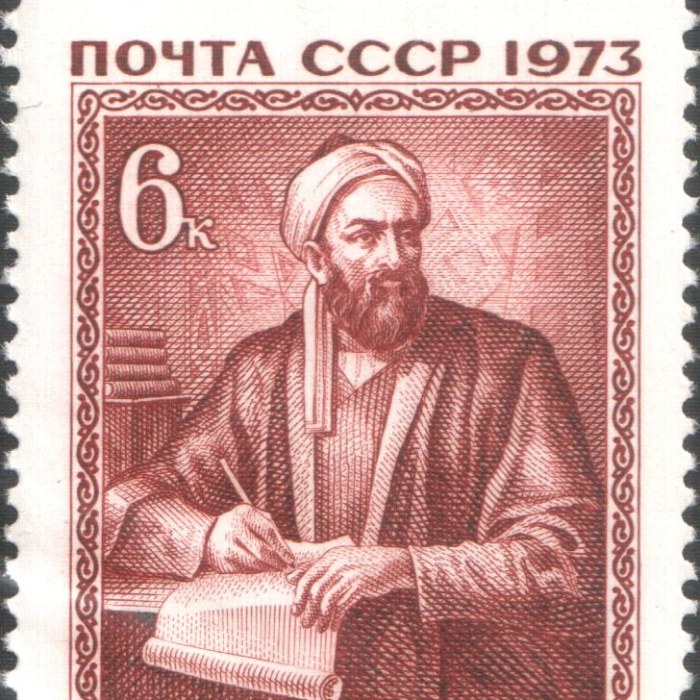
Al-Biruni
Measured the size of the Earth from a mountain in the Punjab, and studied India by learning its languages
Abu Rayhan al-Biruni was born in 973 in Khwarazm, in what is now Uzbekistan, in a suburb of the city of Kath. He seems to have had no famous family and later wrote that he did not know his own father. He was taught mathematics and astronomy by a local scholar and by his early twenties was making his own observations and corresponding, sometimes sharply, with Ibn Sina.
His life was governed by war. He moved between courts as rulers rose and fell, and in 1017 Mahmud of Ghazni conquered Khwarazm and took him back to Ghazni, in Afghanistan, as part of the spoils. He spent most of the next decades there, sometimes in favour and sometimes not.
Mahmud's raids into India gave al-Biruni a chance nobody had taken before. He learned Sanskrit, read Indian texts on astronomy and mathematics, questioned scholars, and wrote a long book on India that described its science, customs and religion without contempt, at a time when his patron was looting its temples. He noted his own ignorance where he had it. He also used a clever method, sighting the horizon from the top of a hill near Nandana in the Punjab, to estimate the radius of the Earth, and got a figure close to the modern one.
He wrote over a hundred works, on everything from the density of metals to the calendar, and died in Ghazni around 1050. Much of his writing survives only in fragments.