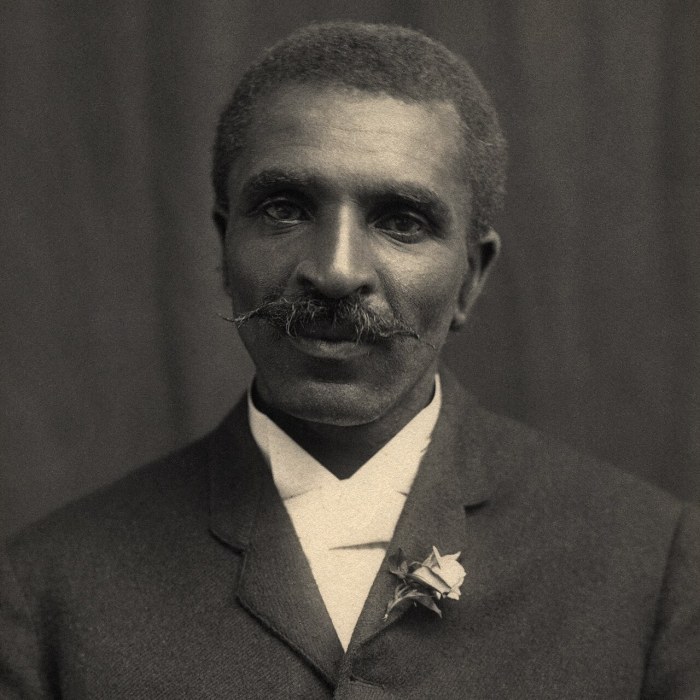
George Washington Carver
Born into slavery, kidnapped as a baby, he taught the American South how to feed itself
George Carver was born into slavery in Missouri around 1864; no one recorded the date. As an infant he was kidnapped with his mother by raiders. He was recovered and returned to the farm; his mother was not. Freed at the end of the Civil War, he was raised by the couple who had owned him, and because he was too sickly for field work he was left to wander, collecting plants and earning the nickname "the plant doctor".
No school nearby would take a Black child, so at about 11 he walked to a town ten miles away to attend one. He spent his teens and twenties drifting through Kansas working as a cook and laundryman to fund his education. A college accepted him by letter and then turned him away at the door when they saw his colour. In 1891 he became the first Black student at Iowa State, where he earned a master's degree in agriculture.
In 1896 Booker T. Washington recruited him to the Tuskegee Institute in Alabama, and he stayed for the rest of his life. The land around Tuskegee had been exhausted by cotton, and its farmers, mostly Black sharecroppers, were destitute. Carver showed them how peanuts, sweet potatoes and cowpeas restored nitrogen to the soil, and found hundreds of uses for the crops so there would be a market.
In 1921 he testified to Congress about peanuts and was asked to speak for ten minutes; the committee kept him for nearly two hours. He died in 1943 and was the first African American to be honoured with a national monument.