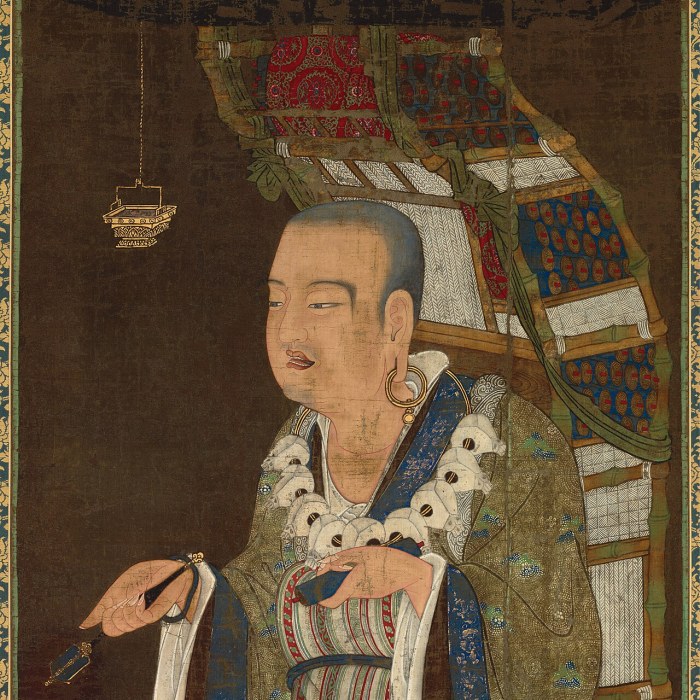
Xuanzang
A monk who broke the law to leave China and walked to India in search of the truth
Xuanzang was a Buddhist monk troubled by the number of contradictory and incomplete translations of Buddhist scripture circulating in Tang dynasty China. He decided the only solution was to travel to India, where Buddhism had begun, and study the original texts. The emperor had banned foreign travel at the time, so in 629 Xuanzang left the capital without permission, slipping past border checkpoints and travelling at night to avoid patrols.
His route took him across the Gobi Desert, where he nearly died of thirst after losing his water supply, and through the mountain passes and city-states of Central Asia, including a stop in Turfan whose king was so taken with him that he had to be persuaded, rather than forced, to let Xuanzang continue. He crossed the Hindu Kush and descended into India, travelling for years among its kingdoms, visiting Buddhist sites and eventually studying at Nalanda, then the greatest centre of Buddhist learning in the world, under its most respected teachers.
After roughly seventeen years away, Xuanzang returned to China in 645 with several hundred Buddhist texts, statues and relics, and to his surprise was welcomed rather than punished, given imperial support to translate the scriptures he had brought back. His translations and his own account of the journey, the Great Tang Records on the Western Regions, became essential sources for understanding both Buddhism and the geography and politics of Central Asia and India at the time.
His journey was later reimagined, heavily fictionalised, as the basis for the classic Chinese novel Journey to the West, though the real Xuanzang's achievement was scholarly rather than magical: seventeen years of walking, translating and simply refusing to give up.