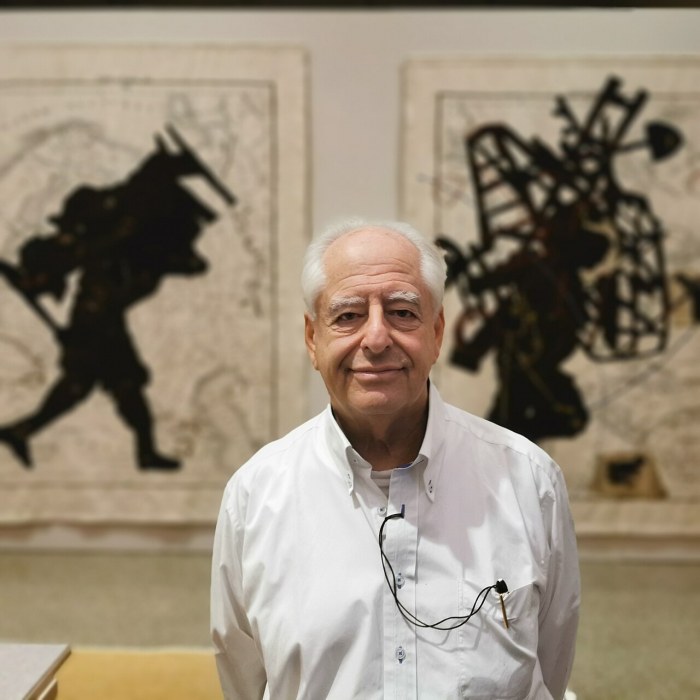
William Kentridge
Trained as a mime in Paris before turning charcoal drawings into acclaimed animated films
William Kentridge grew up in Johannesburg in a Jewish family of prominent anti-apartheid lawyers, an inheritance of political engagement that shadows his work. He studied politics and African studies at university, then trained at an art school, but for years he was unsure whether painting was really his path.
Convinced he wanted to act, he spent a year in Paris in his mid twenties studying theatre and mime at the Ecole Jacques Lecoq. He returned to South Africa having decided he was not, in fact, a talented performer, and spent the following years working in film and television production, designing props and sets, still drawing on the side without a clear sense of where it would lead.
In the late 1980s he began making short animated films by drawing in charcoal, photographing the image, partially erasing it, redrawing it and photographing again, building up a smudged, ghostly record of change on a single sheet of paper. Films such as Felix in Exile used the method to explore memory, guilt and the landscape of apartheid and its aftermath.
Since then Kentridge has expanded into large charcoal drawings, tapestries, sculpture and opera and theatre direction, staging productions from The Magic Flute to Alban Berg\'s Lulu, while continuing to work from the same Johannesburg studio where he began.