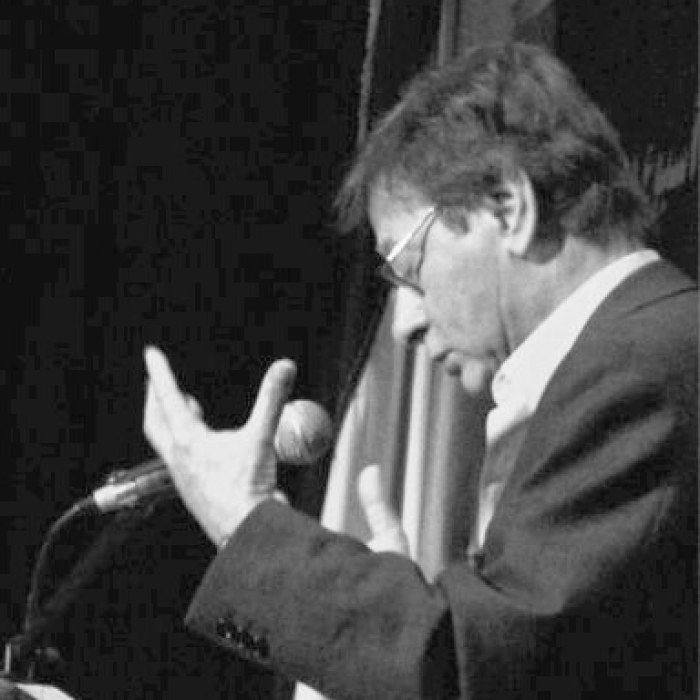
Mahmoud Darwish
His village was erased when he was seven, and he spent his life writing it back into existence
Mahmoud Darwish was born in al-Birwa, a village in Galilee, in 1941. In 1948, when he was seven, the family fled to Lebanon ahead of the Israeli army; when they slipped back across the border a year later, the village had been demolished and its land given to new settlements. Because they had missed the census they were classed as present absentees, people who existed but had no legal right to be where they were.
He wrote poems from his teens and was first arrested at twenty. Through the 1960s he was repeatedly jailed or placed under house arrest for reading his work in public and for travelling without permits. Identity Card, written in 1964 and beginning with the words Write down, I am an Arab, was recited at rallies across the Arab world and made him famous before he was 25.
In 1970 he left, first for Moscow and Cairo, then Beirut, where he lived through the Israeli siege of 1982, and Paris. He wrote the Palestinian declaration of independence in 1988 and resigned from the PLO executive in 1993 in protest at the Oslo accords, which he thought a bad bargain. He was allowed to settle in Ramallah in 1996, having spent 26 years away.
His later poems grew more private and more doubtful, concerned with illness and time as much as with land. He survived two heart operations and died after a third, in Houston in 2008. He was given a state funeral in Ramallah.