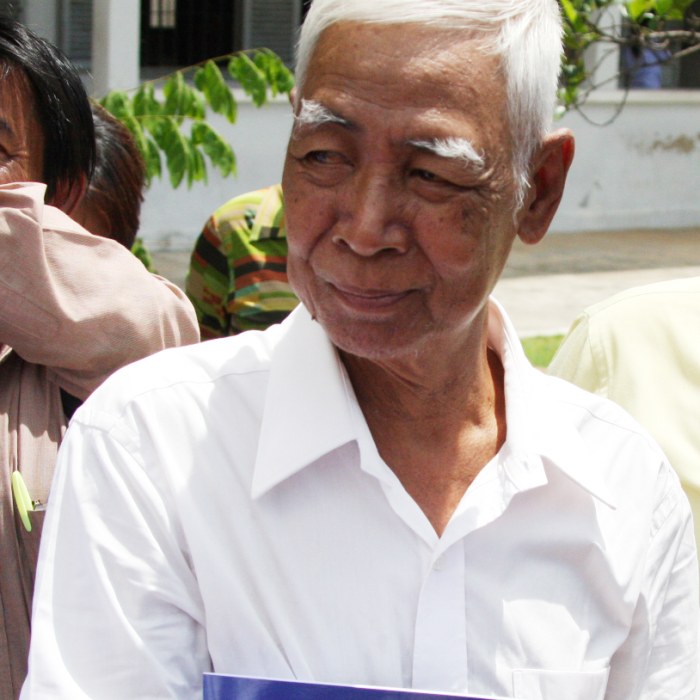
Vann Nath
Kept alive in a Khmer Rouge death camp because he could paint, he later testified against his captors
Vann Nath trained as a sign and billboard painter in Cambodia before the Khmer Rouge seized power in 1975. In 1978 he was arrested and sent to Tuol Sleng, the secret prison in Phnom Penh known as S-21, where an estimated fourteen thousand people were tortured and killed. He expected to die there like almost everyone else.
He survived because the prison's commanders discovered he could paint and put him to work producing portraits and busts of Pol Pot from photographs, along with other propaganda images. It was skilled, closely watched labour that kept him alive when the vast majority of inmates were executed. Only a handful of prisoners are known to have survived Tuol Sleng.
After Vietnamese forces overthrew the Khmer Rouge in 1979, Vann Nath returned to the prison, by then turned into a genocide museum, and began painting scenes of what he had seen there: torture, executions and the daily terror of the cells, images now displayed permanently at the museum as evidence rather than art in the ordinary sense.
In 2009 he testified at the international tribunal trying Kaing Guek Eav, known as Duch, the commandant who had run Tuol Sleng, describing the conditions he had endured. He continued painting and running a small restaurant in Phnom Penh until his death from kidney failure in 2011.