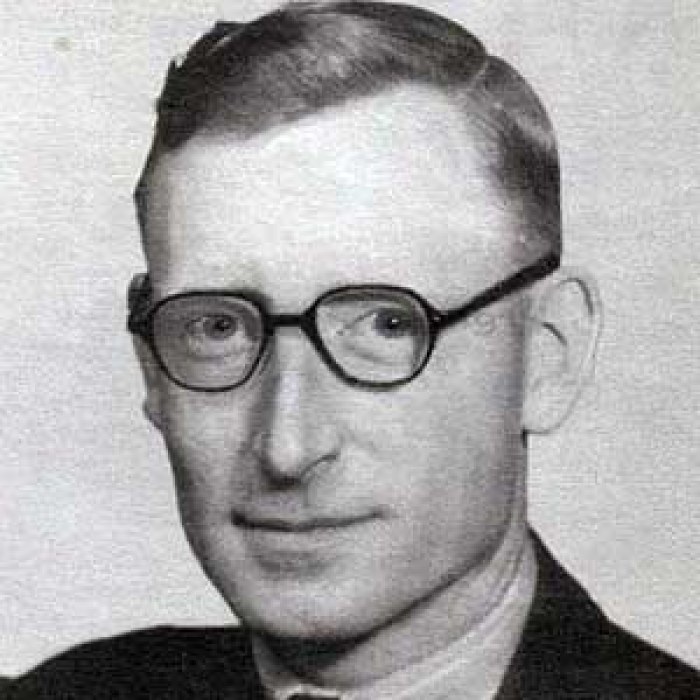
Tommy Flowers
Built the first electronic computer with his own money and was ordered to keep quiet for 30 years
Tommy Flowers grew up in Poplar in East London, the son of a bricklayer. He took a mechanical apprenticeship at the Royal Arsenal in Woolwich and studied for an engineering degree in the evenings. In 1926 he joined the Post Office and by the 1930s was at its research station at Dollis Hill, working on electronic telephone switching with thermionic valves.
In 1943 he was brought in to help the codebreakers at Bletchley Park attack the Lorenz cipher used for messages between Hitler and his generals. The existing machine was slow and unreliable. Flowers proposed something nobody had tried: an electronic machine with 1,500 valves. The Bletchley experts thought that many valves would never work reliably and turned him down. Flowers knew from telephone exchanges that valves failed mainly when switched on and off, so he built it anyway at Dollis Hill, with his own team, in eleven months, paying for some of the parts himself.
Colossus ran at Bletchley in February 1944. An improved version with 2,400 valves was working on 1 June, five days before D-Day, and helped confirm that the Germans had been fooled about where the landings would come. Ten were built.
After the war Flowers was given 1,000 pounds, less than he had spent, and ordered to destroy his drawings. When he asked the Bank of England for a loan to build a commercial computer he was refused because they did not believe such a machine could work. He was not allowed to say otherwise until the 1970s.