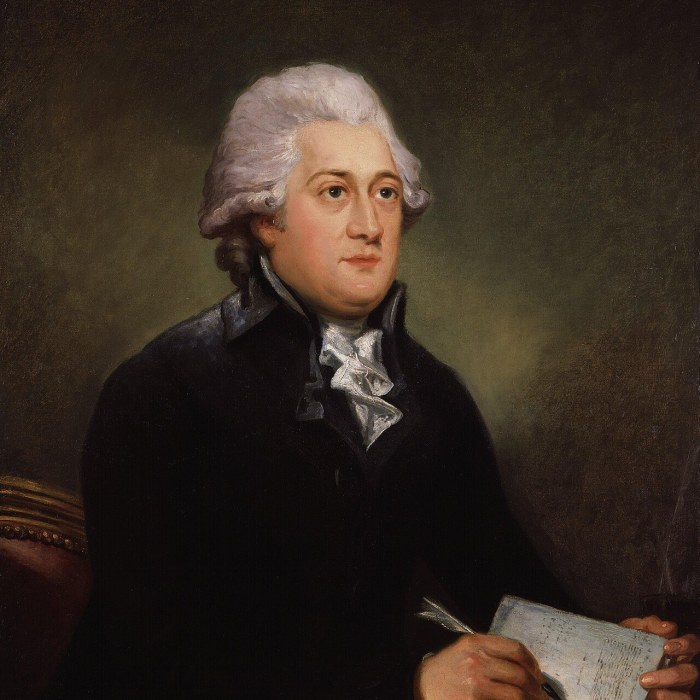
Thomas Clarkson
Rode 35,000 miles gathering the evidence that ended the British slave trade
Thomas Clarkson was a Cambridge student in 1785 when he entered a Latin essay competition on the question of whether it was lawful to make men slaves against their will. He won, and on the ride back to London he found he could not stop thinking about the facts he had uncovered. He got off his horse at Wadesmill in Hertfordshire and, as he later wrote, decided that if the contents of the essay were true, someone ought to see the calamities to their end.
In 1787 he helped found the Society for Effecting the Abolition of the Slave Trade, whose committee was mostly Quakers, and he became its investigator. Over the following years he rode some 35,000 miles around Britain, visiting Bristol, Liverpool and other ports to find sailors who would testify. He was refused, lied to and once nearly thrown into Liverpool harbour by a gang of seamen. He collected shackles, thumbscrews and branding irons, the muster rolls that showed how many crewmen died on each voyage, and a chest of African cloth, leather and ivory to show what trade could replace slaving. The evidence went to Wilberforce for the parliamentary fight.
By 1794 he had broken down physically and financially and withdrew for a decade. He returned in 1804, and the trade was abolished in 1807. He then campaigned against slavery itself, presided over the 1840 World Anti-Slavery Convention at nearly 80, and quarrelled bitterly with Wilberforce's sons over who deserved the credit.
He died in 1846.