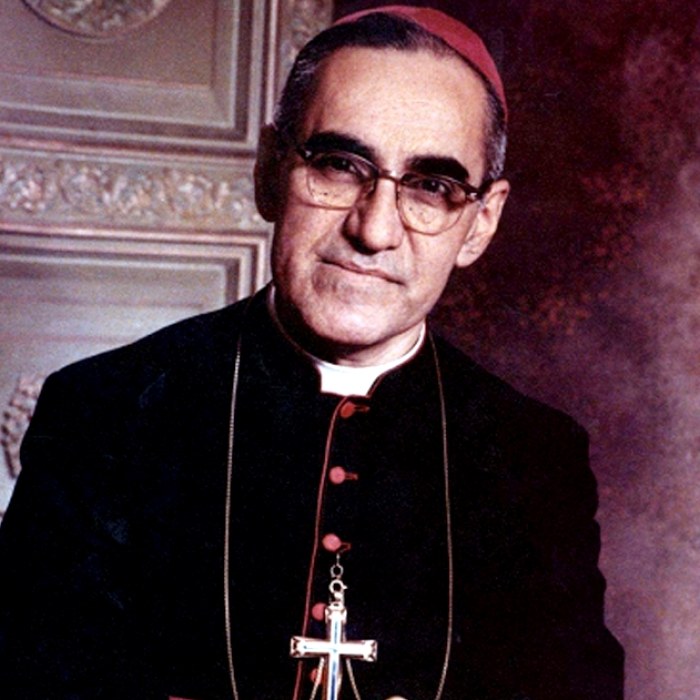
Óscar Romero
The safe, conservative archbishop who became the voice of El Salvador's poor and was shot at the altar
Óscar Arnulfo Romero was born in a mountain town in eastern El Salvador, the son of a telegraph operator, and was apprenticed to a carpenter before entering the seminary at thirteen. He studied in Rome, was ordained in 1942 and spent decades as a parish priest and diocesan administrator with a reputation for piety, caution and a dislike of the radical priests who were organising peasants. When he was made Archbishop of San Salvador in February 1977, the landowners and generals were relieved and the reformers were dismayed.
Three weeks later his friend Rutilio Grande, a Jesuit who worked with farm labourers, was machine-gunned on a country road with an old man and a boy. Romero drove out to see the bodies that night. He cancelled all Masses in the diocese the following Sunday except one, in the cathedral, and demanded an investigation the government never held. From then on his Sunday homilies, broadcast on the church radio station and heard across the country, became the only public record of the killings and disappearances, read out name by name.
He was denounced by the government, isolated by most of the other bishops and reported to Rome as a subversive. In February 1980 he wrote to President Carter asking him to stop sending military aid. On 23 March he told soldiers, in the name of God, to stop the repression.
The next day a gunman shot him through the heart as he stood at the altar of a hospital chapel. He was canonised in 2018.