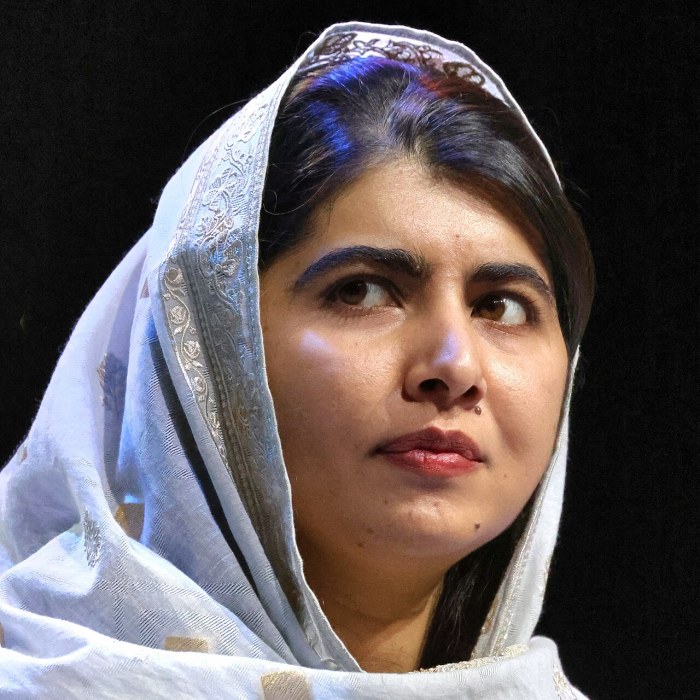
Malala Yousafzai
Shot for going to school, she became the youngest Nobel laureate in history
Malala grew up in the Swat Valley in northern Pakistan, where her father ran a school and encouraged her to speak her mind. When the Taliban took control of the valley in 2007 they closed girls' schools, banned music and television, and enforced their rules with public floggings.
At 11 she began writing an anonymous diary for the BBC Urdu service about life under the ban, then started appearing openly in interviews and documentaries to argue that girls had a right to learn. The attention made her a target. On 9 October 2012 a gunman boarded her school bus, asked for her by name, and shot her in the head.
She was flown to Birmingham in England for surgery and months of rehabilitation. Instead of retreating, she used the platform the attack had given her. On her sixteenth birthday she addressed the United Nations, and in 2014, at 17, she became the youngest ever Nobel Peace Prize laureate.
The Malala Fund, which she set up with her father, now supports girls' education in countries from Afghanistan to Brazil. She went on to study Philosophy, Politics and Economics at Oxford, graduating in 2020. She has said that the attack took away her fear: "They thought that the bullet would silence us, but they failed."