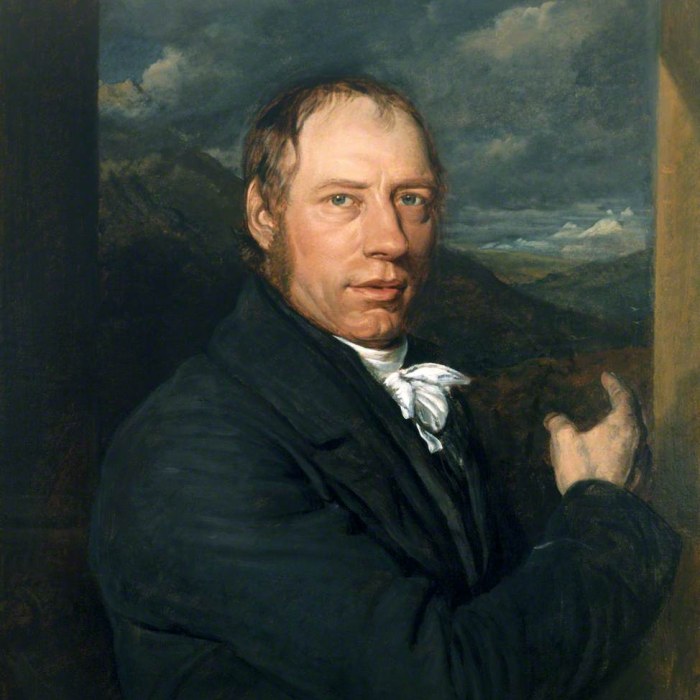
Richard Trevithick
Built the first railway locomotive and died without the money to pay for his own funeral
Richard Trevithick grew up among the tin mines of Cornwall, the son of a mine captain. His schoolmaster called him disobedient, slow and obstinate. He grew into a huge, strong man, a champion wrestler, and learned engineering by watching the pumping engines that kept the mines from flooding.
Where James Watt used steam at low pressure and thought anything else was dangerous, Trevithick built engines that used high-pressure steam, which made them small and powerful enough to move themselves. On Christmas Eve 1801 he drove a steam road carriage up a hill in Camborne with friends hanging off it. On 21 February 1804 a locomotive he had built at Penydarren ironworks in South Wales hauled ten tons of iron and about seventy men along nearly ten miles of track. It was the first time a steam engine had run on rails pulling a load. The cast iron rails broke under its weight.
He never made the railway pay. In 1808 he ran a locomotive called Catch Me Who Can on a circular track in London and charged a shilling a ride, but the public treated it as a fairground novelty. In 1816 he went to Peru to build engines for the silver mines and lost everything in the wars of independence. Stranded in Colombia in 1827, he was given his fare home by a young Robert Stephenson, son of the man who would take the credit for railways.
He died in a Dartford inn in 1833 without money. His fellow workers paid for the burial.