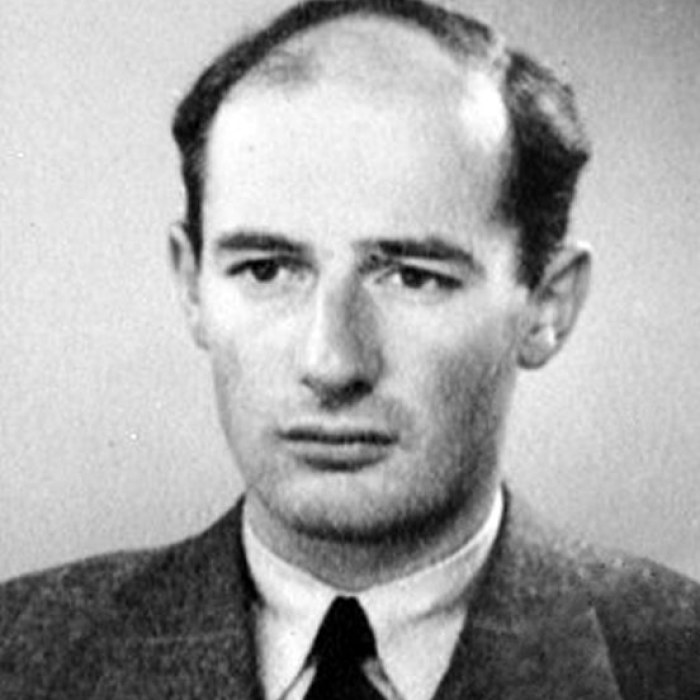
Raoul Wallenberg
Handed out Swedish passes on the death marches from Budapest, then vanished into Soviet custody
Raoul Wallenberg was born in 1912 into Sweden's most powerful banking family, but his father had died before he was born and he grew up somewhat apart from the dynasty. He studied architecture in Michigan, worked in a bank in Haifa, where he met Jewish refugees from Germany, and drifted into a trading firm in Stockholm whose Hungarian Jewish partner could no longer travel. That was how he came to know Budapest.
In 1944 Germany occupied Hungary and began deporting its Jews to Auschwitz at a rate of thousands a day. The American War Refugee Board wanted someone on the ground, and the Swedish legation agreed to give Wallenberg a diplomatic post with a free hand. He arrived in July, aged thirty-one.
His method was audacity. He designed an official-looking protective pass in Swedish colours that had no standing in law, printed thousands of them, and then behaved as though they did, buying buildings and declaring them Swedish territory. When the Arrow Cross took over in October and began marching Jews on foot towards Austria, he followed the columns with lists, food and passes, pulling people out under the noses of the guards. Together with the other neutral legations his operation is credited with saving tens of thousands of lives.
When the Red Army reached Budapest in January 1945 he went to meet them and was arrested. The Soviets later said he had died in the Lubyanka prison in July 1947. What actually happened to him has never been established.