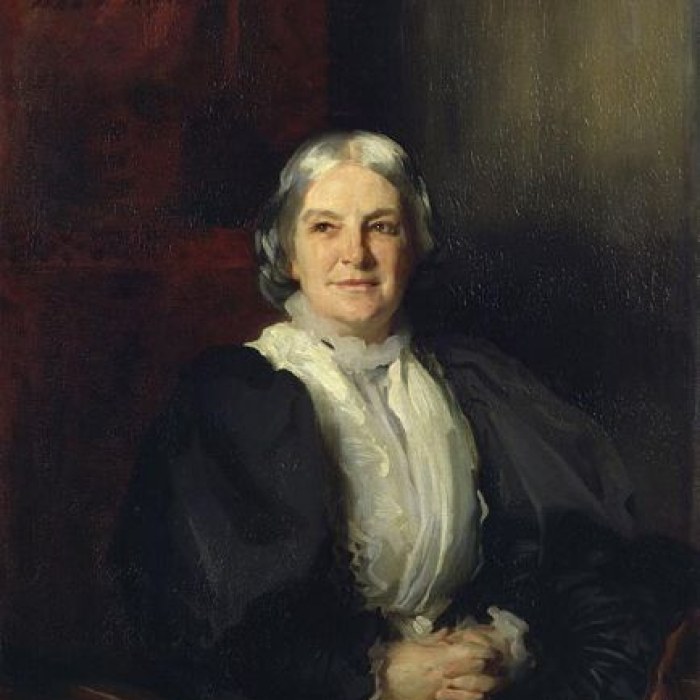
Octavia Hill
Managed London slum housing tenant by tenant and co-founded the National Trust
Octavia Hill's father went bankrupt and suffered a breakdown when she was a small child, and the family was raised by her mother and her grandfather, a public health reformer. At fourteen she was managing a workshop where ragged-school girls made toy furniture, and she took to visiting their homes, some of the worst in London.
In 1865 the critic John Ruskin, who had taught her drawing, bought three run-down houses in Marylebone and put her in charge of them. Her method was unglamorous: collect the rent every week in person, repair what was broken, evict those who would not pay, and treat tenants as people who could be trusted with a decent home. It worked, and Ruskin got his five per cent. Other owners handed her their properties, and she trained a corps of women rent collectors and housing managers, an entirely new profession.
She was hard on herself and on others, and suffered a collapse in 1877 from overwork and a broken engagement. She opposed state pensions and, later, votes for women, positions that put her at odds with many reformers.
Her second great cause was space. She fought to keep Swiss Cottage Fields, Parliament Hill and Hampstead Heath open for the poor, and in 1895, with Robert Hunter and Hardwicke Rawnsley, founded the National Trust to hold land and buildings for everyone. She refused public honours and a burial in Westminster Abbey, and was buried in a Kent churchyard in 1912.