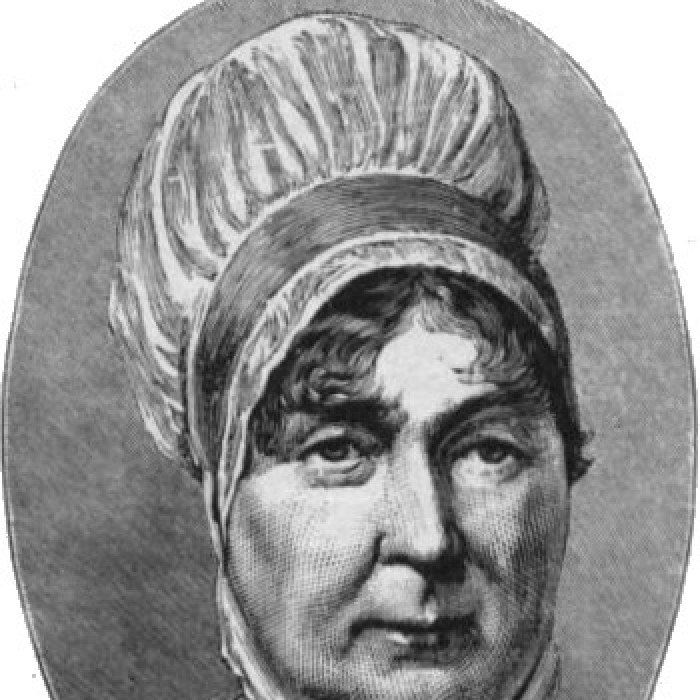
Elizabeth Fry
Walked into Newgate's women's wards in 1813 and made Parliament look at what she saw
Elizabeth Gurney was born into a wealthy Quaker banking family in Norwich. As a girl she was anxious, poorly educated and afraid of the dark, and her diaries show her doubting for years whether she had any real faith. A sermon by an American Quaker when she was seventeen turned her towards a plainer, more serious life. She married Joseph Fry, a London merchant, in 1800 and had eleven children.
In 1813 a family friend persuaded her to visit the women's side of Newgate Prison. She found some three hundred women and their children crowded into wards, sleeping on the floor, cooking, washing and fighting in the same space, with no separation between those convicted and those awaiting trial. She came back with clothes for the babies, and kept coming back.
In 1817 she formed an association of women to run a school for the children, set the prisoners to sewing and knitting for pay, and appoint a matron. Order followed. The next year she gave evidence to a House of Commons committee, the first woman to do so, and her ideas on separating prisoners, employing them and using female warders shaped the 1823 Gaols Act.
Her life was not free of trouble. Her husband's bank collapsed in 1828, the family lost its home and the Quakers disowned him, though not her. She went on visiting prisons, convict ships and workhouses, and in 1840 set up a training institution for nurses. Her portrait appeared on the Bank of England five-pound note from 2002 to 2016.