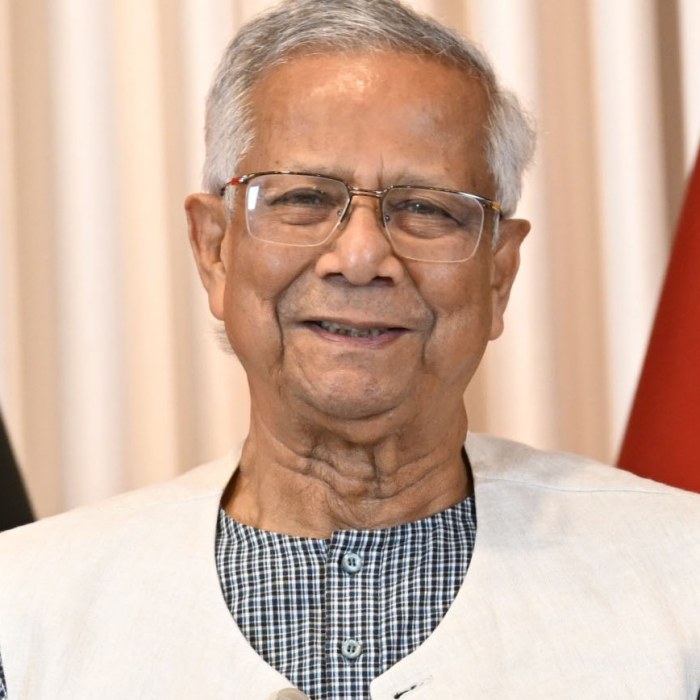
Muhammad Yunus
Lent 27 dollars to 42 village women and invented banking for the poor
Muhammad Yunus was born in 1940 in Chittagong, the third of nine surviving children of a jeweller. He was a scout and a keen student, won a Fulbright scholarship to the United States and took a PhD in economics at Vanderbilt. During the 1971 war he campaigned in America for Bangladesh's independence, and afterwards went home to teach at Chittagong University.
In 1974 famine spread across the country and he found that the elegant theories he was teaching had nothing to say about the people dying of hunger a few miles away. He began going to the village of Jobra next to the campus to talk to them. A woman making bamboo stools told him she borrowed the money for bamboo from a trader who then took the stools at his own price, leaving her two cents a day. He and a student listed 42 people in the same position; their combined debt came to 27 dollars. He lent it from his own pocket.
Banks refused to follow, saying the poor had no collateral and would not repay. Yunus offered himself as guarantor, and the repayments came in. In 1983 Grameen Bank was chartered, lending small sums without collateral, mostly to women, organised in groups that supported one another. The model spread to dozens of countries; it has also drawn criticism where commercial imitators charged high interest.
He and the bank shared the 2006 Nobel Peace Prize. In 2011 the government forced him out of Grameen, and in the years that followed he faced a series of court cases he called political. In August 2024, after the government fell, he was asked to head Bangladesh's interim administration.