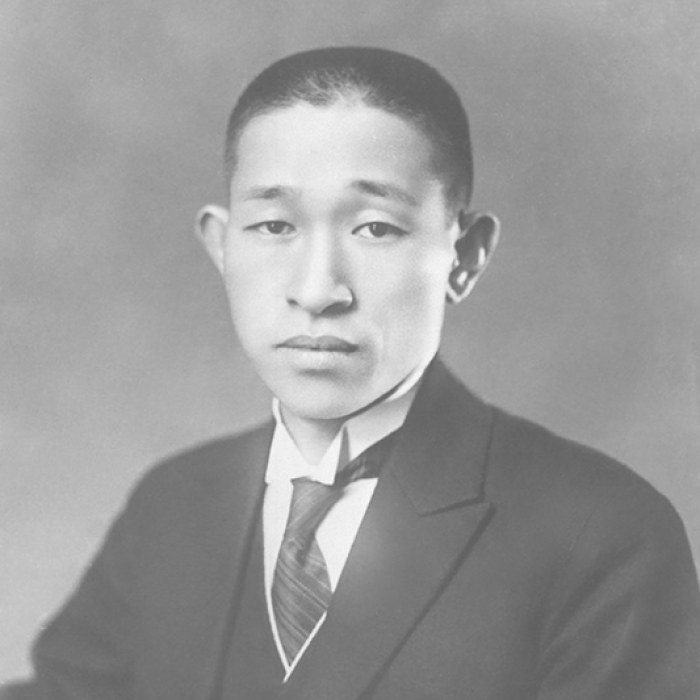
Konosuke Matsushita
Apprenticed at nine, he founded Panasonic in a tenement and refused to sack a single worker in the Depression
Konosuke Matsushita was born in 1894 in a village in Wakayama, the youngest of eight children of a landowner who lost everything in rice speculation. At nine he was sent to Osaka to work in a shop selling charcoal braziers, then in a bicycle shop, sleeping under the counter. He had four years of schooling. At fifteen he joined the Osaka Electric Light Company as a wiring assistant and rose to inspector.
In 1917 he designed an improved light socket, and when his employer showed no interest he left to make it himself. He, his wife Mumeno and her younger brother Toshio Iue, who would later found Sanyo, worked in two rooms of a tenement with almost no money. The first product sold badly. What saved them was an order for a thousand insulator plates for electric fans. In 1923 a battery-powered bicycle lamp that lasted far longer than others took off after he gave shops free samples and told them to pay only if the lamps sold.
The Depression of 1929 halved his sales. Advised to lay off half the staff, he instead cut production to half-days, kept everyone on full pay, and sent office workers out to sell the stock. It was cleared within months. In 1932 he told his employees that the company's mission was to make goods as cheap and plentiful as tap water, so that poverty could be reduced.
After the war the occupation authorities removed him from his own company as a wartime industrialist; employees and their union petitioned for his return. He retired as chairman in 1973, founded a school for future politicians, and died in 1989 aged 94.