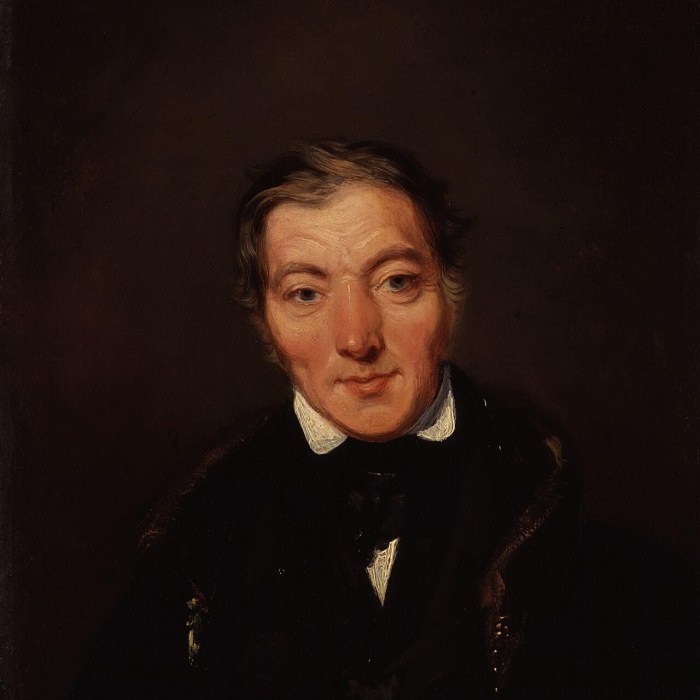
Robert Owen
A draper’s apprentice who ran a cotton mill on the idea that workers were people, not parts
Robert Owen was born in Newtown, in mid Wales, the son of a saddler and ironmonger. He left school at nine and at ten was sent to Stamford as a draper's apprentice. By nineteen he was managing a Manchester cotton mill with 500 workers, having talked his way into the job with borrowed money and considerable nerve.
In 1799 he and partners bought the New Lanark mills on the Clyde in Scotland, and he married the previous owner's daughter, Caroline Dale. The village housed some 2,000 people, including several hundred pauper children shipped in from Edinburgh and Glasgow workhouses. Owen stopped employing children under ten, shortened the working day, opened a shop selling goods at cost, and in 1816 founded the Institute for the Formation of Character, with what is usually counted as Britain's first infant school. Discipline was kept not by beating but by a coloured block hung at each workstation showing how the worker had behaved.
His partners objected to the expense, and he had to replace them twice; the last group included the philosopher Jeremy Bentham. The mills stayed profitable, and thousands of visitors, including royalty, came to see how.
In 1825 he sank most of his money into New Harmony, a community in Indiana meant to show the whole world could be organised on cooperative lines. It fell apart within a few years. He came home poorer, threw himself into the trade union and cooperative movements, and was still lecturing and writing into his eighties. He died in 1858 in the town where he was born.