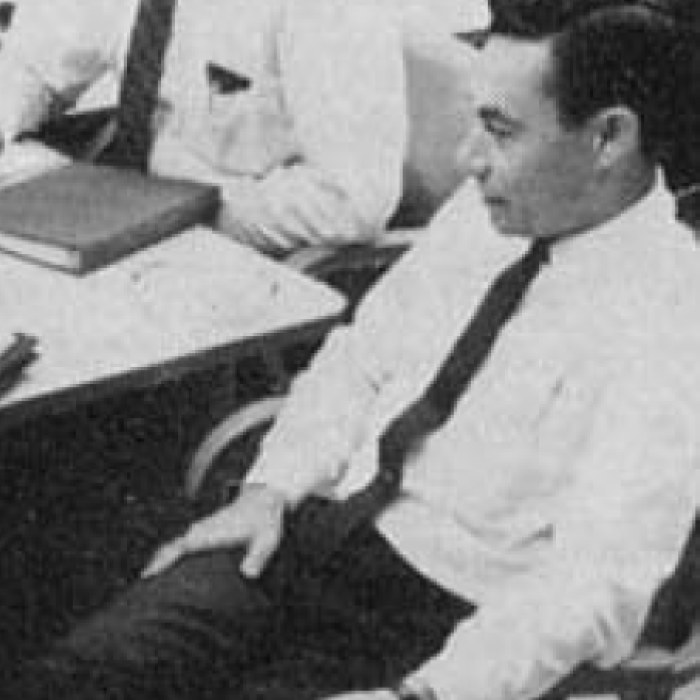
Mohamed Atalla
An Egyptian engineer overlooked at Bell Labs who invented the transistor now inside almost everything
Mohamed Atalla was born in Port Said in 1924, studied at Cairo University, and went to Purdue in the United States for a master\'s degree and doctorate in mechanical engineering. Bell Laboratories hired him in 1949 to work on the reliability of telephone relays. When the transistor arrived he was moved to semiconductors, a field in which he had no formal training, and in 1956 was given a small team of other new recruits.
Early transistors were unreliable because the surface of the silicon was chemically unstable. Atalla found that growing a thin layer of silicon dioxide on the surface sealed it and made it stable. This process, surface passivation, is the basis of all silicon chip manufacturing. Senior management, who trusted physicists over engineers and old hands over newcomers, paid little attention.
Building on it, he proposed a transistor of a kind that had been imagined since the 1920s but never made to work: a metal gate over an oxide layer over silicon. He gave the task of building it to a young Korean colleague, Dawon Kahng, and in 1959 they demonstrated the MOSFET. It was slower than the transistors of the day and Bell Labs shelved it. Atalla resigned. Within a decade it had become the device on which every integrated circuit was built.
He founded semiconductor laboratories at Hewlett-Packard and Fairchild, then in the 1970s turned to security, inventing the hardware system that encrypts PINs at cash machines. He died in 2009.