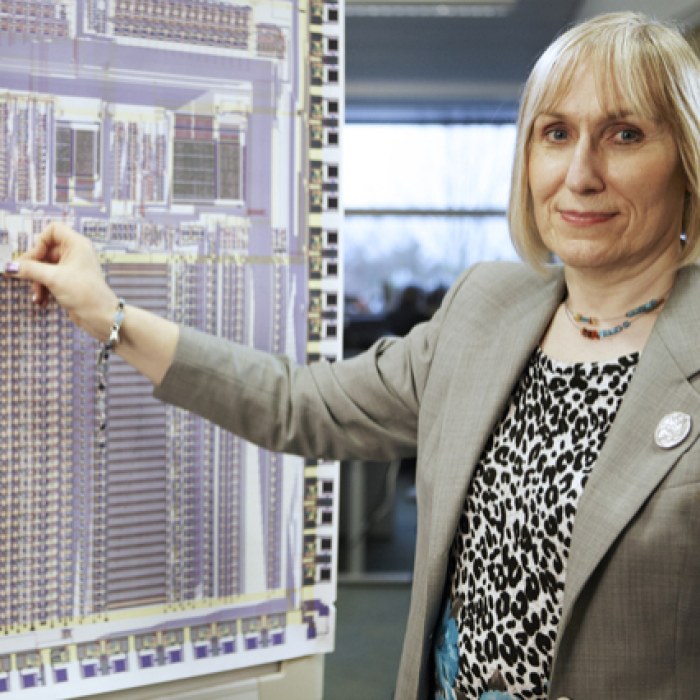
Sophie Wilson
Designed the BBC Micro in a week and the ARM chip inside almost every phone on earth
Sophie Wilson was studying at Cambridge in the late 1970s when a summer job led her to design an electronic controller for a cattle feeder. Hermann Hauser, who was starting a small company called Acorn, was impressed and asked her to design a microcomputer, which she did over the holidays. It became Acorn's first product.
In 1981 the BBC announced a computer literacy project and wanted a machine to go with it. Hauser told the BBC that Acorn already had a prototype. It did not. Wilson and Steve Furber designed and built one in less than a week, working through the nights, and it ran for the first time on the morning the BBC arrived. The BBC Micro went on to sell more than 1.5 million and taught a generation of British children to program in BBC BASIC, which Wilson wrote.
By 1983 Acorn needed a faster processor and the chips available were disappointing. Wilson decided to design one. She wrote the instruction set for the Acorn RISC Machine, keeping it deliberately simple, while Furber designed the hardware, and in April 1985 the first ARM chip worked first time, using so little power that it ran with the supply accidentally disconnected. That low power turned out to be exactly what phones would need.
More than 250 billion ARM chips have now been made. She transitioned in 1994, still works as a chip designer, and was elected a Fellow of the Royal Society in 2013.