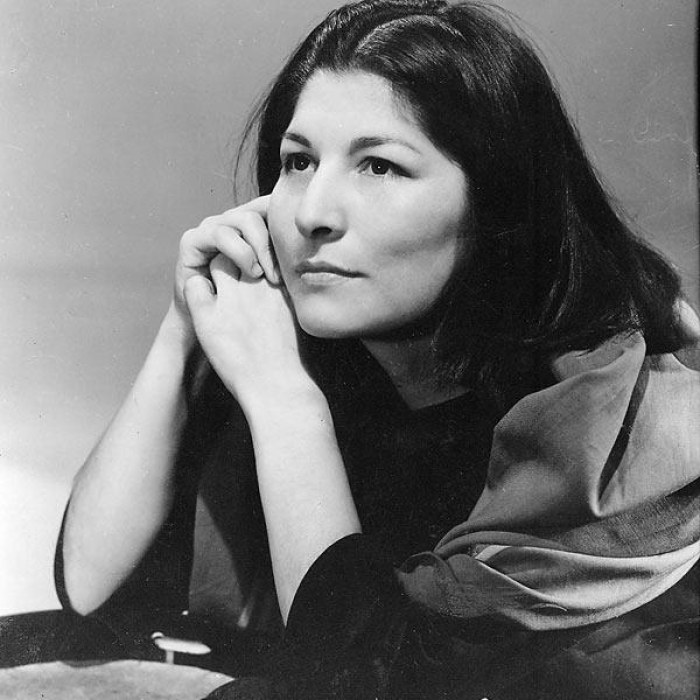
Mercedes Sosa
Arrested on stage with her whole audience, she sang her way back from exile before the junta fell
Mercedes Sosa was born in San Miguel de Tucumán, in the poor north-west of Argentina, to a family of indigenous descent. Her father was a day labourer. At fifteen she entered a radio singing competition under a false name, so her parents would not find out, and won. She sang the folk music of the Andes and the countryside and, in the early 1960s, with her first husband, signed a manifesto for a new song that spoke plainly about ordinary Latin American lives.
Through the 1960s and 1970s she became the great voice of that movement, singing other people\'s songs, Violeta Parra\'s Gracias a la Vida above all, in a low, unornamented contralto that made political protest sound like a lullaby. When the military took power in Argentina in 1976 her records were banned from the radio. She kept performing. In 1979, during a concert in La Plata, police walked on to the stage and arrested her, along with every member of the audience.
She went into exile in Paris and then Madrid, ill and depressed, and did not sing for a long time. In February 1982, with the junta still in power, she came back and gave a series of concerts at the Teatro Ópera in Buenos Aires that became a public act of defiance; the live album from those nights was one of the biggest sellers in the country\'s history.
She died in Buenos Aires in 2009 and was mourned for three days of national tribute.