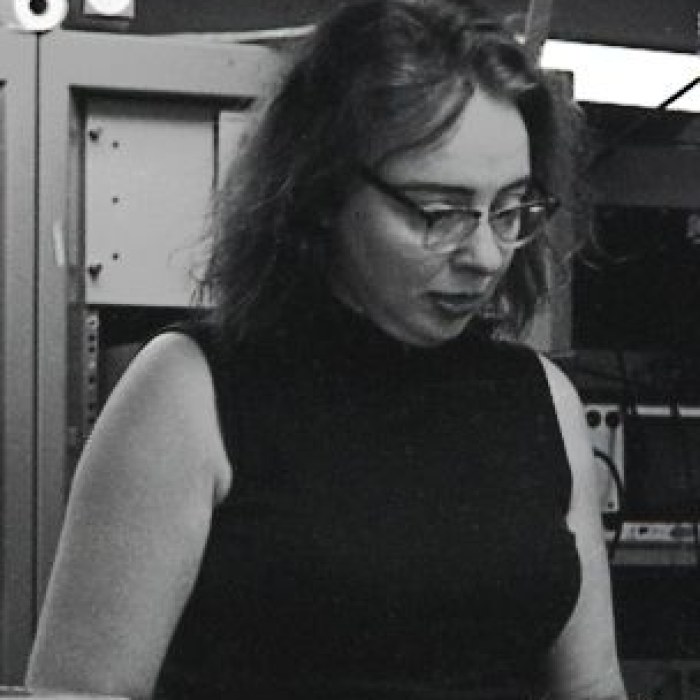
Marie Tharp
Banned from the research ships, she mapped the ocean floor from their soundings and found it splitting apart
Marie Tharp was born in Michigan in 1920, the daughter of a soil surveyor who took her along on his fieldwork. She studied English and music at college, and would probably never have become a geologist had the Second World War not emptied the universities of men. In 1943 the University of Michigan opened its petroleum geology course to women to fill the gap, and she took it.
She arrived at Columbia University in 1948 with degrees in geology and mathematics and was given drafting work. Women were not allowed on the research vessels, so while her colleague Bruce Heezen went to sea taking depth soundings across the Atlantic, Tharp stayed in the office and plotted them. There were very few, in thin lines across a huge blank, and turning them into a picture was as much inference as measurement.
In 1952 she noticed a V-shaped notch running down the middle of the ridge in the ocean's centre, and suggested it was a rift valley where the sea floor was pulling apart. Heezen dismissed it as girl talk; continental drift was then a discredited idea. She kept going. When earthquake epicentres were plotted on her map and fell exactly along the notch, he changed his mind.
Their maps of the ocean floors, painted with the Austrian artist Heinrich Berann, were published in 1977 and made plate tectonics visible to everyone. Tharp was little known for decades. The Library of Congress honoured her in 1997, and she died in 2006.