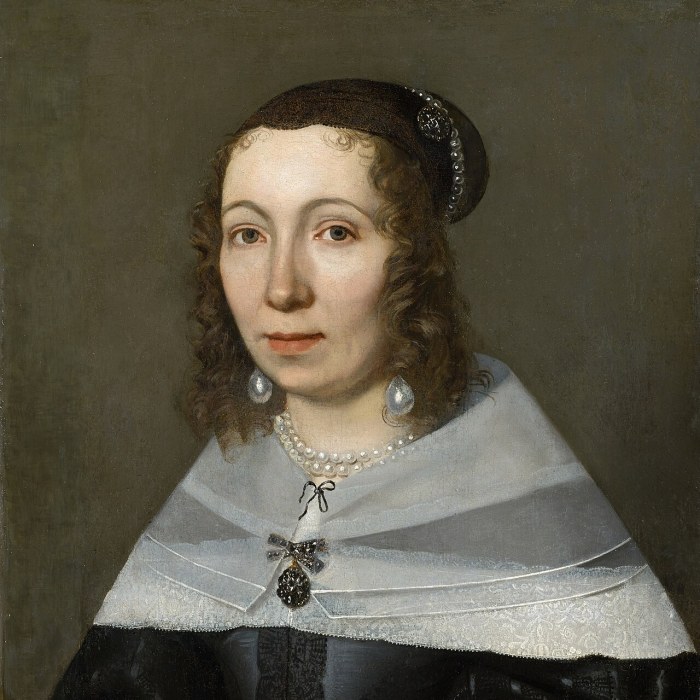
Maria Sibylla Merian
At 52 she sailed to South America to paint insects nobody in Europe had seen
Maria Sibylla Merian was born in Frankfurt in 1647. Her father, a publisher and engraver, died when she was three, and her stepfather, a painter, taught her to draw flowers. From the age of 13 she was collecting caterpillars and keeping them in boxes to watch what they turned into. At the time most educated people believed insects were generated spontaneously from rotting matter. She was among the first to record, in careful paintings, the complete life cycle of a moth or butterfly on the plant that fed it.
She married, had two daughters and worked as an artist and teacher in Nuremberg, publishing her first book on caterpillars in 1679. The marriage failed. In 1685 she took her daughters and joined a strict religious community in the Netherlands, then in 1691 settled in Amsterdam, where she supported the family by selling her paintings and specimens.
Amsterdam's collectors showed her dried tropical insects with no record of how they lived. In 1699, aged 52, she sold her work to fund a voyage to Suriname, a Dutch colony on the coast of South America, with her younger daughter Dorothea. It was a nearly unheard-of journey for a woman without a husband or sponsor. She spent two years in the rainforest heat collecting and painting, relying on enslaved and indigenous people for local knowledge, until malaria forced her home.
The result, published in 1705, was a large and beautiful book on the insects of Suriname. A stroke in 1715 left her partly paralysed. She died in 1717. Her observations were used by Linnaeus and her images are still studied today.