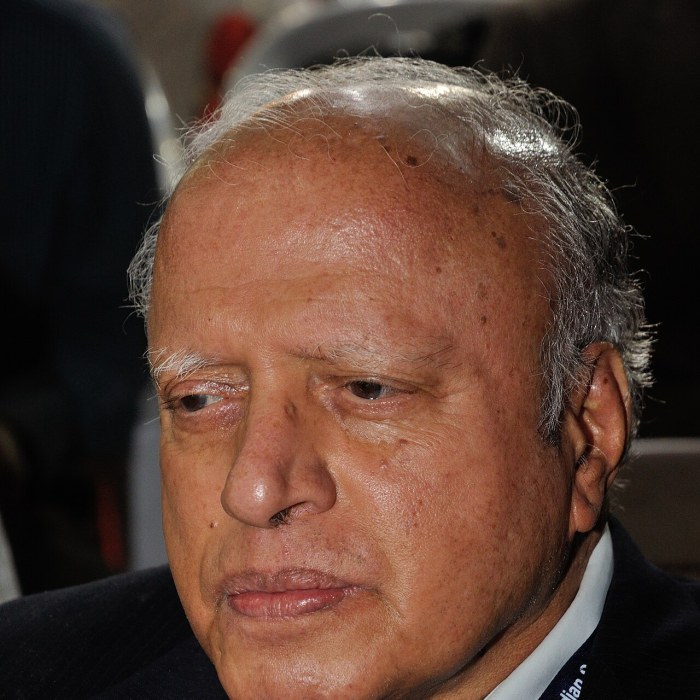
M. S. Swaminathan
Watched the Bengal famine as a student and spent his life making sure India could feed itself
Monkombu Sambasivan Swaminathan was born in 1925 in Kumbakonam, in Tamil Nadu, the son of a surgeon who died when the boy was eleven. He was a medical student in 1943 when the Bengal famine killed around three million people. He switched to agriculture, against the advice of relatives who thought it a poor career, because he wanted to do something about hunger.
He studied genetics at Cambridge, completing a doctorate on potatoes in 1952, and did postdoctoral work in Wisconsin, where he was offered a faculty position. He turned it down and returned to India, which was then dependent on shipments of American grain. In the 1960s the country was described as living from ship to mouth.
At the Indian Agricultural Research Institute he heard about the short, stiff-stemmed wheat that Norman Borlaug had bred in Mexico, and in 1963 he invited Borlaug to India. The new varieties did not fall over when heavily fertilised and gave two or three times the yield of local wheat. Persuading farmers, ministers and sceptical colleagues to take the gamble was Swaminathan's job. In 1968 the harvest was so large that schools were closed to store grain.
He spent his later decades worrying about the costs of that success: exhausted soils, depleted water and the poverty of small farmers. He founded a research foundation in Chennai to work on those problems, won the first World Food Prize in 1987, and died in 2023, aged 98.