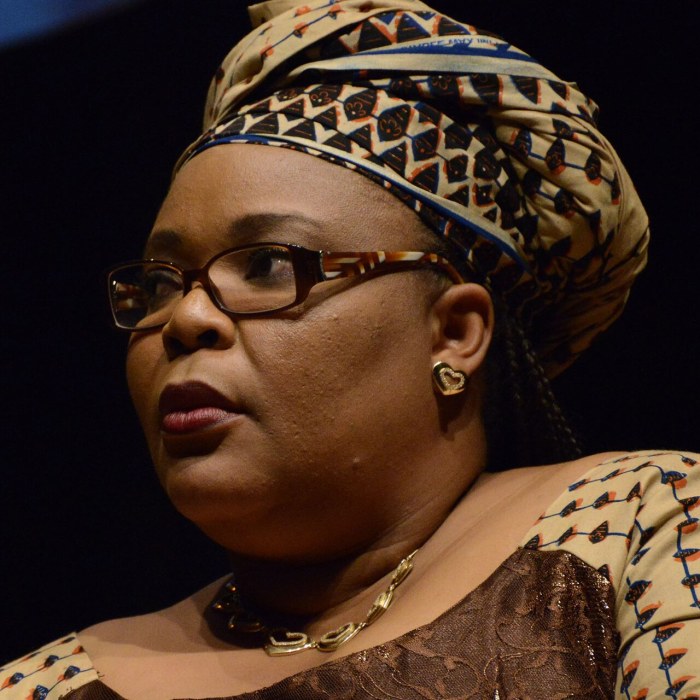
Leymah Gbowee
Organised the women who sat in the sun for months until Liberia’s warlords made peace
Leymah Gbowee was 17 and about to start university when civil war reached Monrovia in 1989. Over the following years she survived displacement, an abusive relationship and the birth of four children, and trained as a trauma counsellor, working with former child soldiers who had killed and been forced to kill. She has written that she came to see the war through their eyes, and that she was also, for a time, drinking heavily and close to giving up.
In 2002, with the war in its second phase under Charles Taylor, she and a small group began organising women through churches and, after a Muslim colleague joined, mosques. Wearing white, thousands of women gathered daily on a field beside the fish market on Taylor's route to work, in sun and rain, holding signs demanding peace. They called a sex strike, which Gbowee later said achieved little in practice but got the press's attention. In April 2003 Taylor agreed to meet them, and she read the women's statement to him.
When peace talks in Accra dragged on for weeks while fighting continued, the women went to Ghana and sat down in the corridor outside the negotiating hall, linking arms and refusing to let the delegates leave until they made progress. Threatened with arrest, Gbowee said she would strip naked, a serious curse in West Africa. The agreement was signed in August; Taylor went into exile.
She shared the Nobel Peace Prize in 2011 and runs a foundation for women's education in Liberia.