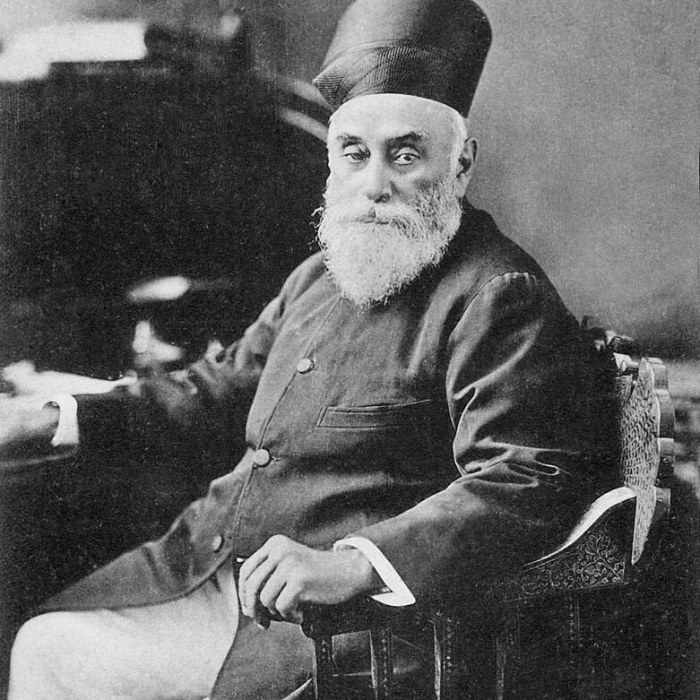
Jamsetji Tata
Planned a steel city, a science institute and a hydroelectric scheme for an India that did not yet exist
Jamsetji Nusserwanji Tata was born in 1839 in Navsari, Gujarat, the first in a long line of Parsi priests to go into trade. His father had set up a small firm in Bombay, and Jamsetji joined it after studying at Elphinstone College. He travelled to China, England and Abyssinia on the firm's business, and during the American Civil War the family made and then nearly lost a fortune in cotton.
In 1869 he bought a bankrupt oil mill and turned it into a cotton mill, sold it at a profit, and in 1877 opened the Empress Mills at Nagpur, away from the crowded Bombay trade. He installed the best machinery he could find, and treated the workers unusually well: a pension fund, accident compensation, ventilated sheds and clean water, at a time when British-run mills in India offered none of it.
By the 1890s he was thinking beyond cotton. He wanted an Indian steel industry, a research university, and hydroelectric power for Bombay. British officials were sceptical, and one told him steel from India was not worth the trouble. He walked the jungles of central India with geologists looking for ore, offered land and money for a science institute, and had the plans for a dam drawn up. He also built the Taj Mahal Hotel in Bombay, which opened in 1903.
He died in 1904 in Germany, with none of the three big projects complete. The Indian Institute of Science opened in Bangalore in 1909, the Tata steel works began production at what is now Jamshedpur in 1912, and the Tata hydroelectric plants lit Bombay from 1915. His sons carried on, and the group still bears his name.