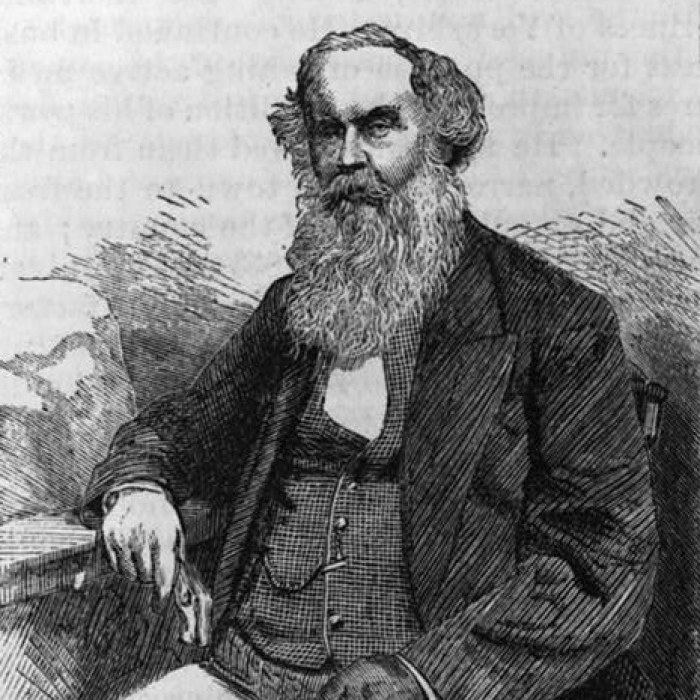
Titus Salt
Moved his mills out of the Bradford smoke and built a whole town for his workers
Titus Salt was born in Morley, near Leeds, in 1803, the son of a wool stapler. He went into his father's business in Bradford, then the fastest-growing and one of the filthiest towns in Europe, where the average life expectancy was around twenty years and the river ran with dye and sewage.
In 1836 he came across bales of alpaca fleece lying unwanted in a Liverpool warehouse. Other spinners had tried it and given up. Salt experimented until he found a way to work it, and the lustrous cloth that resulted made him one of the richest men in the north of England. He became mayor of Bradford in 1848, campaigned for smoke control and cholera prevention, and found the council slow and other mill owners uninterested.
So he did it himself. In 1851 he began building a new mill and village on open land beside the River Aire, three miles out of town. Salts Mill opened in 1853 on his fiftieth birthday, with a banquet for over three thousand workers. Around it rose more than 800 stone houses with running water and gas, a church, a school, wash houses, a hospital, almshouses, an institute with a library and gymnasium, and a park. He banned pubs, but not, as is often said, beer. He would not build a town hall and disliked speeches about himself.
He was made a baronet in 1869 and died in 1876; an estimated 100,000 people lined the route of his funeral. Saltaire is now a World Heritage Site, and the mill houses a gallery of work by another Bradford native, David Hockney.