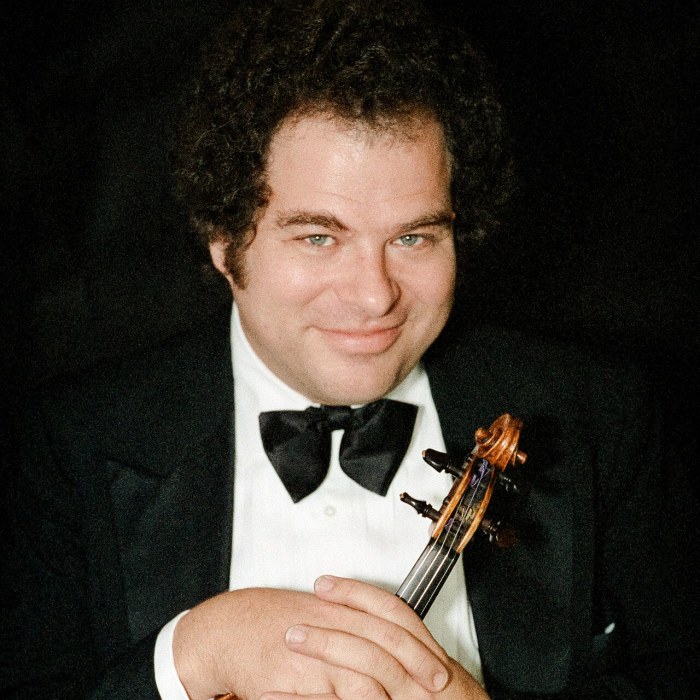
Itzhak Perlman
Paralysed by polio at four, he was told a violinist had to stand, and has played sitting down ever since
Itzhak Perlman was born in Tel Aviv to Polish Jewish immigrants; his father was a barber. He heard the violin on the radio at three and wanted one, and was turned away from the local conservatory because he was too small to hold the instrument. He got a toy one instead. At four he contracted polio, and after a year in bed he could walk only with leg braces and crutches. He has said that his parents\' great achievement was to treat this as an inconvenience rather than a tragedy.
He practised sitting down, which worried teachers who thought a violinist must stand, and by his early teens was playing well enough that an American television scout took him to New York. He appeared on the Ed Sullivan Show in 1958 at thirteen and stayed to study at Juilliard. In 1964 he won the Leventritt Competition, and the audience at his Carnegie Hall debut watched him make his slow way across the stage on crutches before he sat and played.
For sixty years he has performed everywhere, with a big warm tone and an ease of manner that made him a television regular, recorded almost the whole repertoire, played the solos for the film Schindler\'s List and taught generations of students. He has also spoken plainly about access: about halls with no ramps, hotels with steps and airlines that treated his motorised scooter as an afterthought. He received the Presidential Medal of Freedom in 2015.