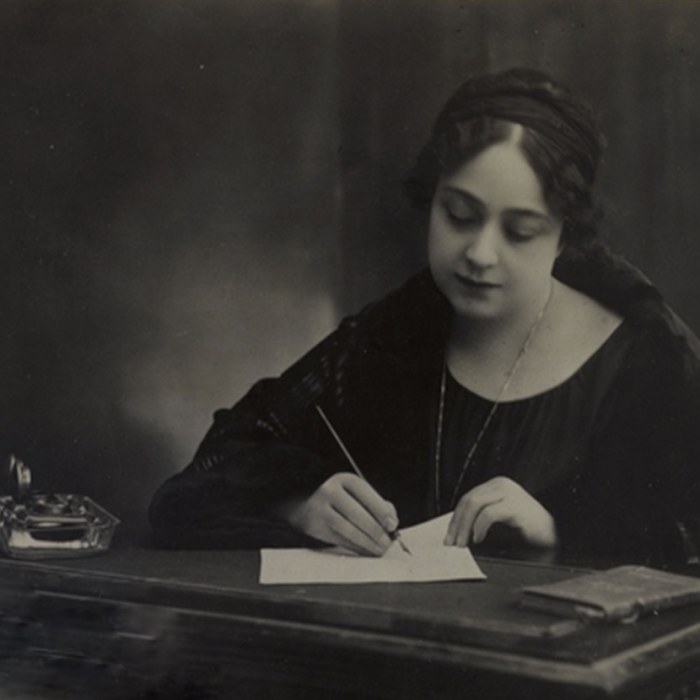
Huda Sha'arawi
Took off her veil at Cairo railway station and founded the Egyptian women's movement
Nur al-Huda Sultan was born into one of the wealthiest families in Egypt and grew up in the secluded women's quarters of her father's house in Cairo. She was taught the Quran, French and piano, but was told she could not study Arabic grammar because she would never need it. At thirteen she was married to her cousin Ali Sha'arawi, a man in his forties who was her legal guardian. She left him within a year and lived apart for seven years, reading and attending lectures for women, before returning to the marriage.
She began, as many well-born women did, with charity, founding a welfare society for poor women in 1909. But in March 1919, when Egyptians rose against British rule, she organised a demonstration of veiled upper-class women through Cairo, the first of its kind, and then led women's committees that ran boycotts and petitions while the men were in prison. When independence came in 1922, the nationalist leaders quietly dropped women from the new political order.
In 1923 she founded the Egyptian Feminist Union. Returning that year from a women's congress in Rome, she stepped off the train in Cairo and removed the veil from her face in front of the crowd. Other women followed. The union's campaigns raised the minimum age of marriage for girls to sixteen, opened secondary and university education to women, and published a journal that argued for the vote and for reform of divorce law.
She died in 1947. Egyptian women won the vote in 1956.