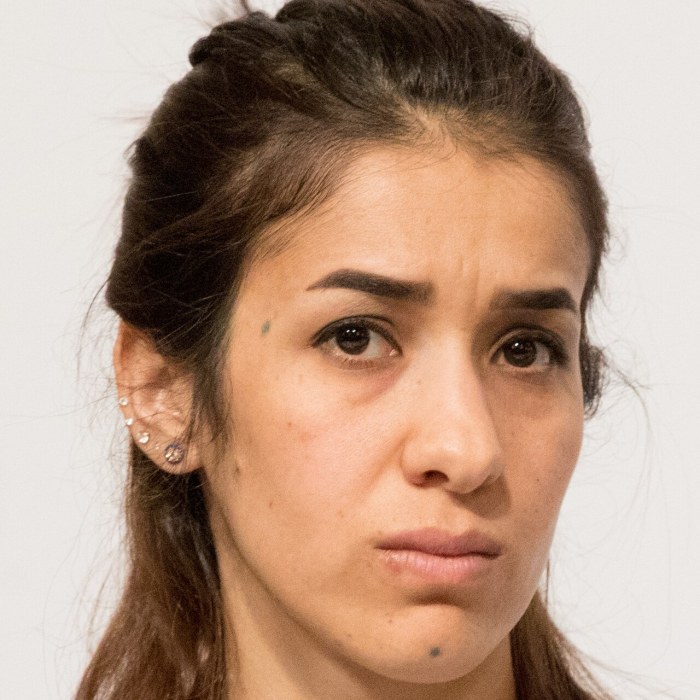
Nadia Murad
Survived ISIS captivity and told her story to the world so that others would not have to
Nadia Murad grew up in Kocho, a Yazidi farming village near Sinjar in northern Iraq, the youngest of a large family of subsistence farmers. She wanted to be a history teacher or to open a beauty salon. On 3 August 2014 the Islamic State overran the Sinjar region. Two weeks later its fighters gathered Kocho's people at the school, separated the men and older boys, and shot them; six of her brothers died, and her mother was killed with the older women. Nadia and the younger women were taken to Mosul and sold.
She was held for about three months, bought and sold several times, beaten and raped, and once punished with a gang rape for trying to escape. When a captor left a door unlocked she walked out, and a Sunni Muslim family in Mosul hid her and smuggled her to Kurdish-held territory using their daughter's identity card.
In 2015 she went to Germany under a programme for traumatised Yazidi women. Rather than staying silent, as many survivors felt they had to, she agreed to address the UN Security Council that December, describing what had been done to her in detail. She has said that retelling the story is a torment each time, and that she does it so that the crimes are recorded and prosecuted.
She founded Nadia's Initiative to rebuild Sinjar and support survivors of sexual violence, published a memoir, The Last Girl, and in 2018 shared the Nobel Peace Prize with the Congolese doctor Denis Mukwege. She is the first Iraqi to win it.