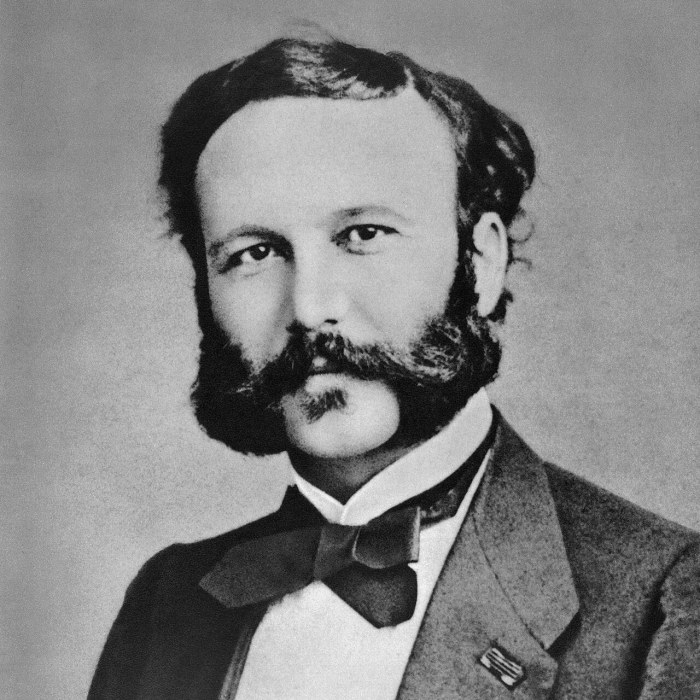
Henry Dunant
Founded the Red Cross, went bankrupt, vanished for decades and won the first Nobel Peace Prize
Henry Dunant was a young Geneva businessman with a mill in French Algeria and a water-rights problem he wanted to raise with Napoleon III. In June 1859 he went to find the emperor at the front in northern Italy, and arrived at Solferino the day after one of the bloodiest battles of the century. Tens of thousands of wounded men lay where they had fallen, with almost no one to help them.
He forgot about the mill. For days he organised the women of the nearby town of Castiglione to wash and feed the injured, bought supplies, and insisted that Austrians be treated alongside French and Italians: "Tutti fratelli", the women said, all brothers. In 1862 he published A Memory of Solferino at his own expense and proposed two things: trained volunteer relief societies in every country, and an international agreement to protect the wounded and those who helped them. Within two years the Red Cross had been founded in Geneva and the first Geneva Convention signed.
Then he lost everything. His Algerian business collapsed in 1867, ruining friends and investors, and a Geneva court held him responsible. He was forced off the Red Cross committee, left the city and drifted through Paris and Germany in poverty, sometimes sleeping rough, embittered and half forgotten.
In 1895 a journalist found him living in a hospice in the Swiss village of Heiden. The rediscovery led, in 1901, to the first Nobel Peace Prize. He never spent the money, and died in Heiden in 1910.