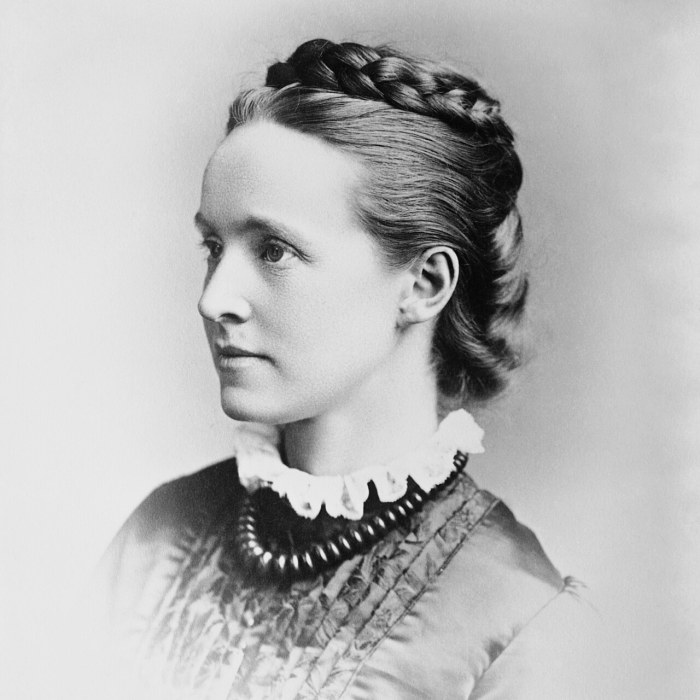
Millicent Fawcett
Led the peaceful campaign for votes for women for more than fifty years and lived to see it won
Millicent Garrett grew up in Aldeburgh, Suffolk, in a large family that expected its daughters to think. Her older sister Elizabeth became the first woman to qualify as a doctor in Britain, and Millicent, at 19, was already collecting signatures for the first women's suffrage petition to Parliament. She married Henry Fawcett, a Liberal MP who had been blinded in a shooting accident, and acted as his eyes, reading and writing for him while making her own name as a speaker and writer on economics.
When the suffrage societies merged in 1897 she became president of the National Union of Women's Suffrage Societies, which grew to more than 50,000 members. She refused to endorse the militant tactics of the Pankhursts, arguing that stone-throwing gave opponents an excuse, but she also refused to condemn the women who were imprisoned for it. In 1913 her union organised a six-week pilgrimage of marchers from all over the country to Hyde Park to show that suffragists could be both lawful and numerous.
She was not a saint of the cause. During the Boer War she led a government commission into the concentration camps in South Africa that Emily Hobhouse had exposed, and confirmed the appalling death rates while remaining a supporter of the war itself.
Women over 30 got the vote in 1918. Fawcett retired the following year and died in 1929, a year after the franchise was equalised. In 2018 she became the first woman honoured with a statue in Parliament Square.