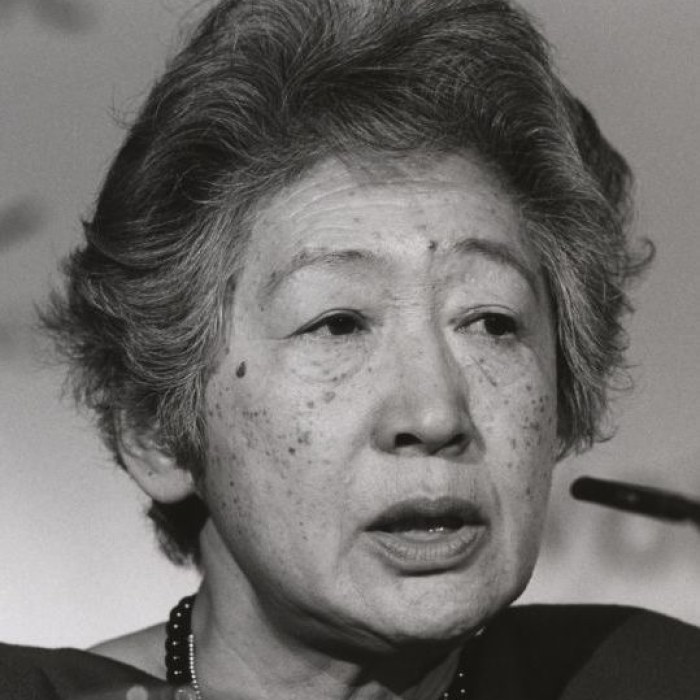
Sadako Ogata
The first woman to run the UN refugee agency, through some of its worst years
Sadako Ogata studied politics in Japan and the United States and built an academic career before moving into diplomacy, representing Japan at the United Nations and chairing UNICEF's executive board. In 1990 she became United Nations High Commissioner for Refugees, the first woman and the first Japanese national to hold the post, at a moment when the number of displaced people worldwide was rising sharply and the Cold War assumptions the agency had been built on no longer applied.
Her tenure, which ran until 2000, coincided with some of the era's largest displacement crises: Kurdish refugees fleeing Iraq after the Gulf War, the war in Bosnia, and the Rwandan genocide and its aftermath in the Great Lakes region of Africa, where camps in Zaire sheltered both genuine refugees and perpetrators of the genocide, a problem with no clean solution. She pushed UNHCR to operate inside conflict zones to protect people who could not reach a border, a shift that expanded the agency's mandate and its risks.
After leaving UNHCR she returned to Japan and led its overseas aid agency, JICA, applying the same insistence that development and humanitarian work needed to happen together in fragile states. She died in Tokyo in 2019, having reshaped how the UN thought about the difference between a refugee crisis and a war.