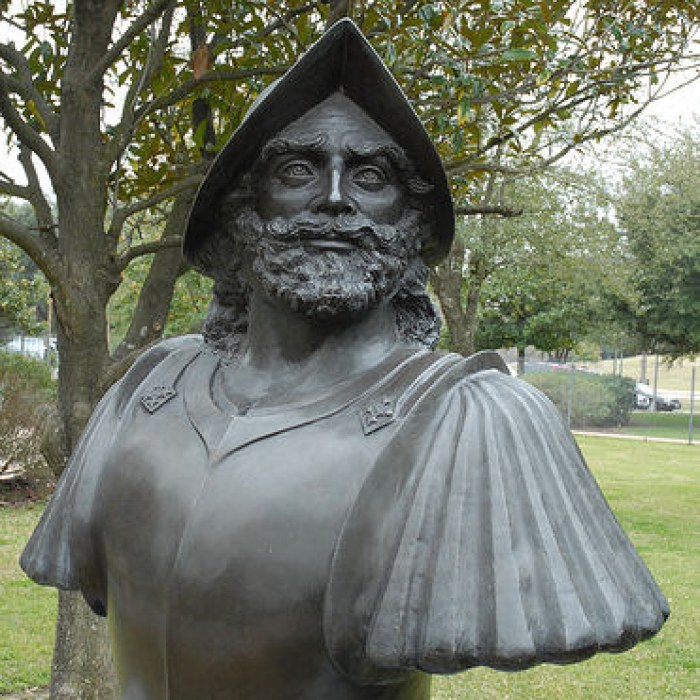
Alvar Nunez Cabeza de Vaca
Shipwrecked and enslaved, he spent eight years walking home and returned arguing for indigenous rights
Alvar Nunez Cabeza de Vaca sailed to the Americas in 1527 as treasurer of a Spanish expedition sent to conquer and colonise Florida. The expedition fell apart almost immediately, battered by storms, disease and conflict with local nations, and by 1528 the surviving members set out from the Gulf coast on makeshift rafts, hoping to reach Spanish territory in Mexico. Cabeza de Vaca's raft washed up on what is now the Texas coast; nearly everyone else in the expedition was already dead or soon would be.
For the next several years he lived among various indigenous nations of the region, at times as an enslaved labourer, at times as a travelling trader moving goods between groups, and eventually as a healer whose treatments, more ritual than medical, earned him a reputation that gave him some freedom of movement. In 1534 he and three other survivors, including an enslaved Moroccan man named Estevanico, began walking west, eventually crossing into what is now Mexico and reaching Spanish territory in 1536, eight years after the shipwreck.
His account of the journey described the peoples he had lived among with unusual respect for a conquistador-era writer, and he later argued, as governor of a Spanish province in South America, for more humane treatment of indigenous people, a stance that made him enemies and led to his arrest and recall to Spain.