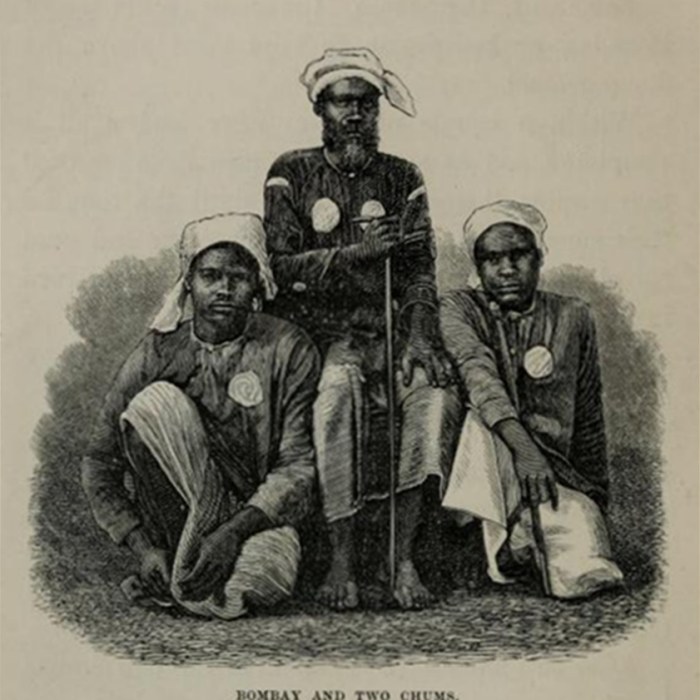
Sidi Mubarak Bombay
Enslaved as a child, he became the guide every famous explorer of East Africa depended on
Sidi Mubarak was born around 1820 to a waYao family near the present border of Tanzania and Mozambique. As a boy he was seized by Swahili slave traders and sold at the coastal market of Kilwa. He was shipped across the Indian Ocean to Gujarat, where his owner renamed him Mubarak and where, after years in bondage, his owner's death brought him freedom. He made his way back to East Africa and settled in Zanzibar, taking the nickname Bombay from his years in India.
In 1857 the British officer Richard Burton hired him for an expedition inland to search for the great lakes of Central Africa, alongside John Hanning Speke. Bombay's fluency in Swahili and several inland languages, his calm under pressure, and his skill at managing porters made him indispensable; he effectively ran the caravan while the Europeans took the credit for what it found, including Lake Tanganyika and Lake Victoria.
He went on to work for Speke and Grant on their return journey to the Nile's source, then for the parties sent to find David Livingstone, and finally for Henry Morton Stanley's famous 1871 search that produced the meeting at Ujiji. Each expedition relied on the same unglamorous work: negotiating with local rulers, nursing sick men, keeping frightened porters from deserting, and holding a caravan of strangers together for months at a time in unfamiliar territory.
Bombay received a small pension from the Royal Geographical Society late in life, a rare acknowledgement for a man whose labour made other men famous. He died in 1885.