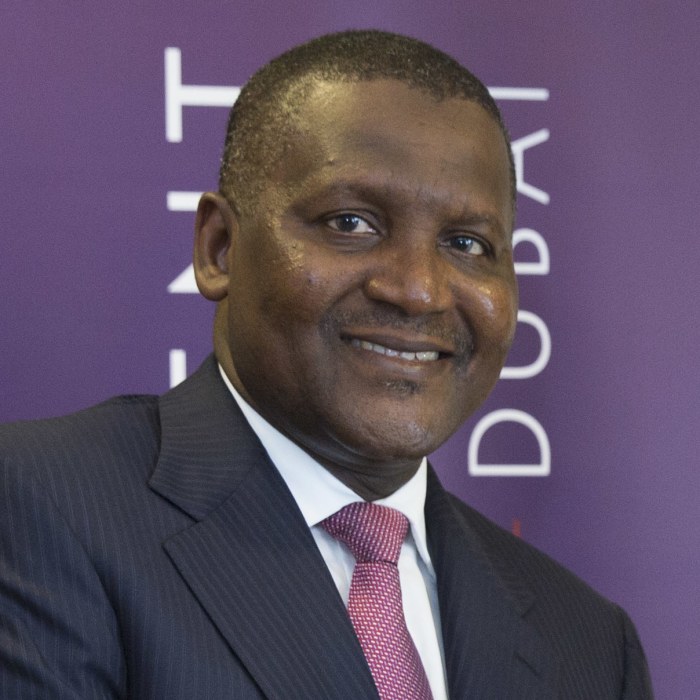
Aliko Dangote
Borrowed from an uncle to trade cement by the bag, then built Africa's biggest industrial group
Aliko Dangote was born in Kano, northern Nigeria, in 1957, into a family of Muslim traders; his great-grandfather had been one of the richest men in the region. In 1977, aged twenty, he borrowed the equivalent of about three thousand pounds from an uncle and began importing bags of cement and sacks of sugar and rice through the port of Lagos, reselling them at a small margin in a market where reliable supply was scarce and shortages were common.
Trading made him money, but he wanted factories, not just import licences. Through the 1990s and 2000s, often against the advice of bankers who thought Nigerian manufacturing too risky, he built plants to make sugar, flour, salt and pasta at home rather than shipping them in. The turning point was cement. Nigeria imported almost all of it until Dangote built local plants, then in 2007 opened Obajana, one of the largest cement plants in the world, and expanded across more than a dozen African countries.
The business was not free of controversy: rivals and some economists argued that tariff protection handed his companies an advantage, and he has had to defend that record publicly more than once. In 2013 he began an even larger gamble, a fertiliser and oil refining complex outside Lagos, financed largely with his own capital after international lenders hesitated, that took a decade and repeated delays before it started producing fuel in 2023.
He has given large sums to health and nutrition programmes through his foundation, including support for polio eradication and malnutrition treatment across the Sahel. He remains based in Lagos and has said repeatedly that he intends to keep building rather than retire.