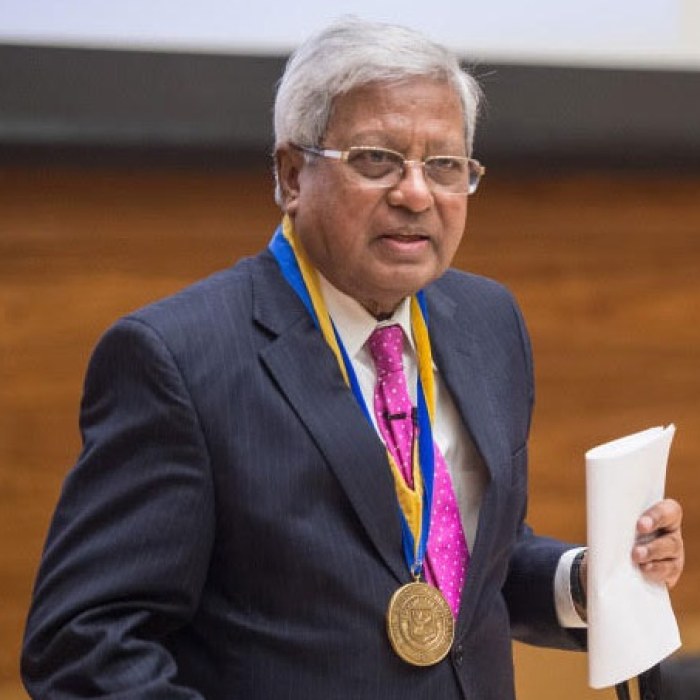
Fazle Hasan Abed
A Shell executive who sold his London flat after a cyclone and built the world’s largest NGO
Fazle Hasan Abed was born in 1936 in Baniachong, in the Sylhet region of what was then British India, to a landowning family. He went to Glasgow to study naval architecture, decided there was little demand for ships in East Pakistan, and switched to accountancy in London. By the late 1960s he was head of finance for Shell in Chittagong, with a good salary and a comfortable life.
In November 1970 a cyclone killed hundreds of thousands of people on the coast near his office, and he and friends spent months organising relief in the delta, seeing at first hand how little anyone in authority did. Months later the war for independence began. Abed left for London, sold his flat, and used the money to campaign and raise funds. When Bangladesh was free at the end of 1971 he went home.
In 1972 he started the Bangladesh Rehabilitation Assistance Committee in Sulla, a remote area where refugees were returning to nothing, building houses and boats. He quickly found that relief solved little, and turned the organisation towards development: village schools, credit for women, and a campaign in the 1980s that taught fourteen million mothers, door to door, to mix a home rehydration solution for children with diarrhoea. Child deaths fell sharply.
He believed in scale and in paying for it. BRAC set up dairies, printing presses, a bank, a university and retail chains whose profits fund its work. By his death in 2019 it employed around 100,000 people and worked in a dozen countries. He was knighted in 2010 and won the World Food Prize in 2015.