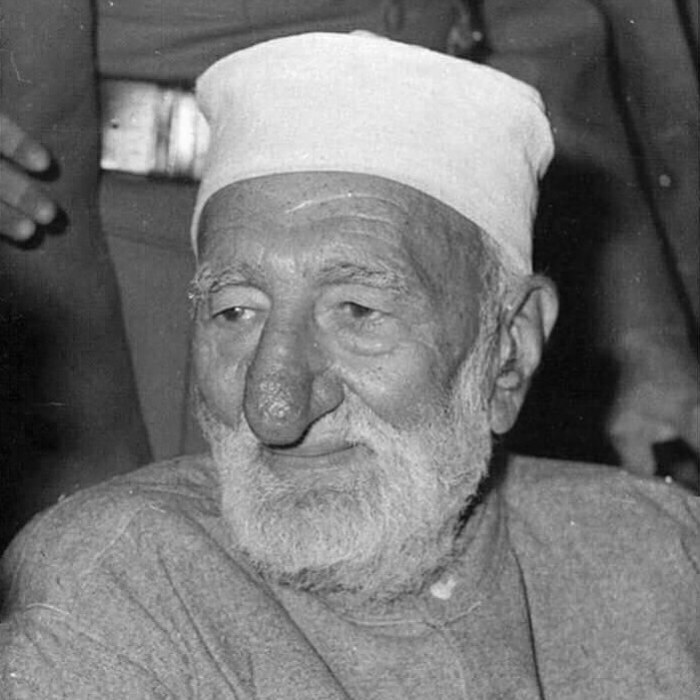
Abdul Ghaffar Khan
Raised a non-violent army of 100,000 Pashtuns and spent a third of his life in prison for it
Abdul Ghaffar Khan was born in Utmanzai, near Peshawar, into a landowning Pashtun family on the North-West Frontier of British India. He was educated at a mission school, turned down a commission in the Guides cavalry after seeing an Indian officer humiliated by a British one, and from 1910 opened village schools instead. The colonial authorities closed them and jailed him. He kept opening them.
In 1929 he founded the Khudai Khidmatgar, the Servants of God, a movement whose members wore red-dyed shirts, took an oath of non-violence and spent their time on sanitation, literacy and the settling of feuds in a region famous for them. At its height it had about 100,000 members. In April 1930 British troops opened fire on an unarmed crowd of its supporters in the Qissa Khwani Bazaar in Peshawar and killed hundreds; the survivors did not retaliate, and a Garhwali regiment refused to fire. The movement's discipline astonished Gandhi, who became his close friend.
He opposed the partition of India, which split his people from the movement's allies and left the Frontier in Pakistan. The new state treated him as a traitor. He spent most of the years between 1948 and the 1960s in Pakistani prisons, often in solitary confinement, and much of the rest in exile in Afghanistan. Altogether he was jailed for about thirty years.
He died in Peshawar in 1988, aged 97, and asked to be buried in Jalalabad. Both sides in the Afghan war declared a ceasefire so that the funeral could cross the border.