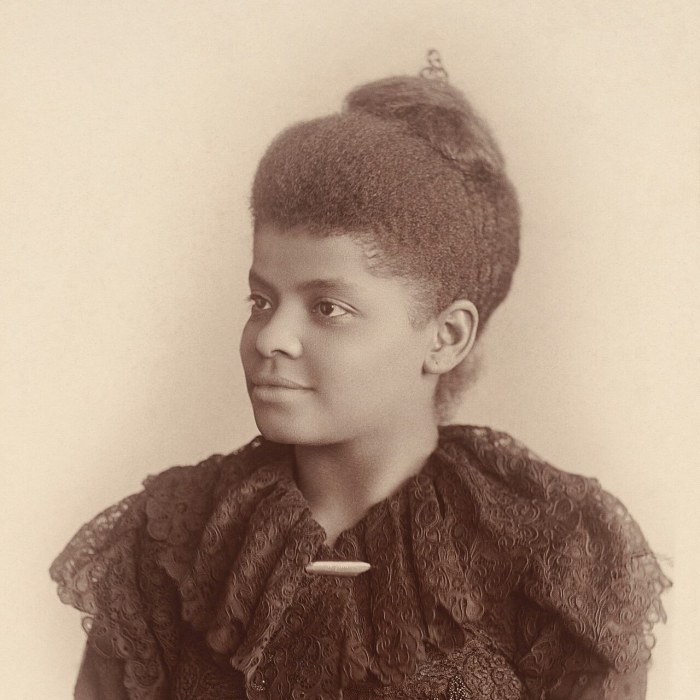
Ida B. Wells
Investigated lynching when it could get her killed, and was run out of Memphis for telling the truth
Ida Bell Wells was born enslaved in Holly Springs, Mississippi, in 1862, a few months before the Emancipation Proclamation. When she was 16 her parents and a baby brother died in a yellow fever epidemic. She lied about her age to get a teaching job and kept her five surviving siblings together. In 1884, after a conductor tried to drag her out of the ladies' carriage on a train, she bit his hand, was thrown off and sued the railroad. She won in the lower court and lost on appeal.
In Memphis she became part-owner of a newspaper, the Free Speech. In March 1892 three friends who ran a grocery store were taken from jail and shot by a mob. Wells wrote that lynching was not a punishment for rape, as its defenders claimed, but a way of terrorising Black people who were doing well. While she was away in New York a mob destroyed her press and she was warned she would be killed if she returned. She did not go back for thirty years.
She gathered the details of hundreds of lynchings from white newspapers and published them as Southern Horrors and A Red Record. On two lecture tours of Britain she built support that embarrassed American officials. Frederick Douglass admired her; many white suffragists found her difficult and kept her at a distance, and in a 1913 suffrage parade she refused instructions to march at the back.
She helped found the NAACP in 1909, campaigned in Chicago until her death in 1931, and was awarded a posthumous Pulitzer Prize citation in 2020.