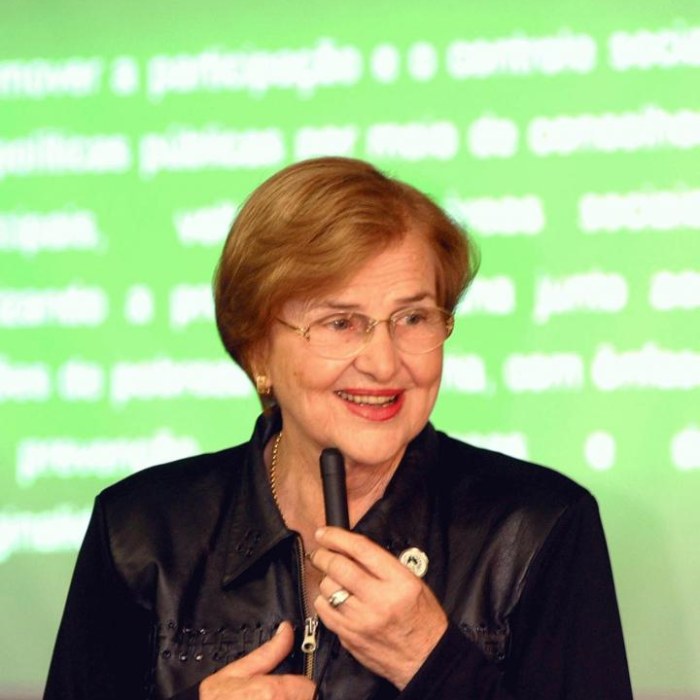
Zilda Arns
Taught poor Brazilian mothers to save their own children, then died helping Haiti
Zilda Arns was one of thirteen children of a German-speaking family in southern Brazil; her brother Paulo became a cardinal and a leading critic of the military dictatorship. She qualified as a doctor in 1959, specialised in paediatrics and public health, and spent years in state health services watching small children die of things that were cheap to prevent: diarrhoea, malnutrition, measles.
In 1983 she and her brother were asked by the church to try something in Florestópolis, a poor town in Paraná where more than a tenth of babies died before their first birthday. Her answer was not a hospital. She recruited local women, most of them mothers with little schooling, and trained them to visit a handful of families each, weigh babies every month, teach breastfeeding and hygiene, and mix a simple rehydration drink of water, sugar and salt. Within a year infant mortality in the town had halved.
That became the Pastoral da Criança, which by the 2000s had a quarter of a million volunteers visiting nearly two million children a month across Brazil, and was copied in a dozen other countries. It was cheap, it was run by the poor for the poor, and it kept meticulous records to prove it worked.
She was nominated several times for the Nobel Peace Prize. On 12 January 2010 she was in Port-au-Prince to help launch the programme in Haiti when the earthquake struck, and she was killed in the collapse of the church where she had just finished speaking.