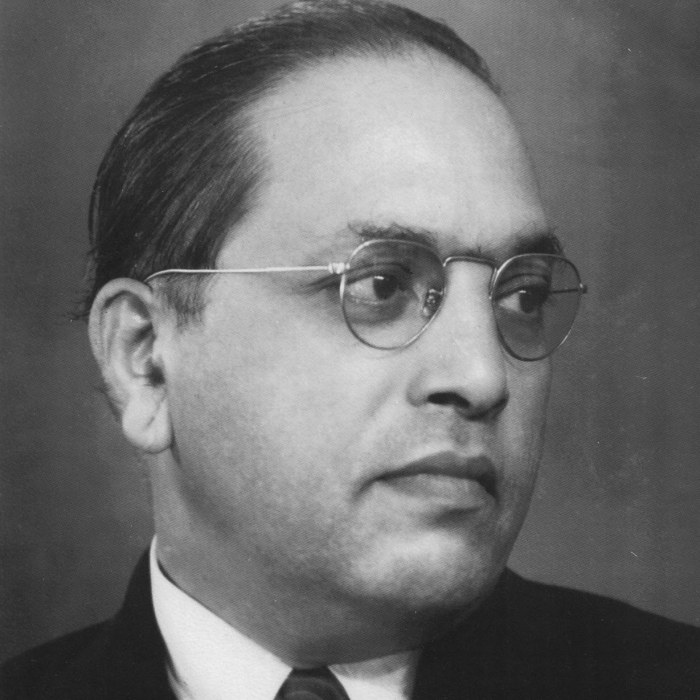
B. R. Ambedkar
Born an untouchable, he wrote India's constitution and led half a million people out of the caste system
Bhimrao Ramji Ambedkar was born at Mhow, in central India, the fourteenth child of a soldier from the Mahar caste, one of the communities then called untouchable. At school he sat apart from the other pupils on a piece of sacking he carried from home, and could not drink from the tap unless a caste Hindu poured the water for him. He was a brilliant student, and the ruler of Baroda paid for him to study at Columbia University and then the London School of Economics, where he earned doctorates in economics and qualified as a barrister.
He came home to find that his degrees changed nothing. Clerks threw files at him rather than hand them over, and he could not find lodgings. He set up as a lawyer, started newspapers and in 1927 led thousands of untouchables to drink from a public tank at Mahad that had been closed to them, then publicly burned the Manusmriti, the Hindu law code that justified caste. At the Round Table Conferences in London he demanded separate electorates for untouchables, and Gandhi fasted against the idea until Ambedkar signed the Poona Pact in 1932. He never forgave Gandhi for the pressure, and never accepted his view that caste could be reformed from within.
In 1947 he was made chairman of the committee drafting the constitution of independent India, which outlawed untouchability. He resigned as law minister in 1951 when a bill to give Hindu women property and divorce rights was blocked. In October 1956, ill with diabetes, he converted to Buddhism at Nagpur with several hundred thousand followers. He died seven weeks later.