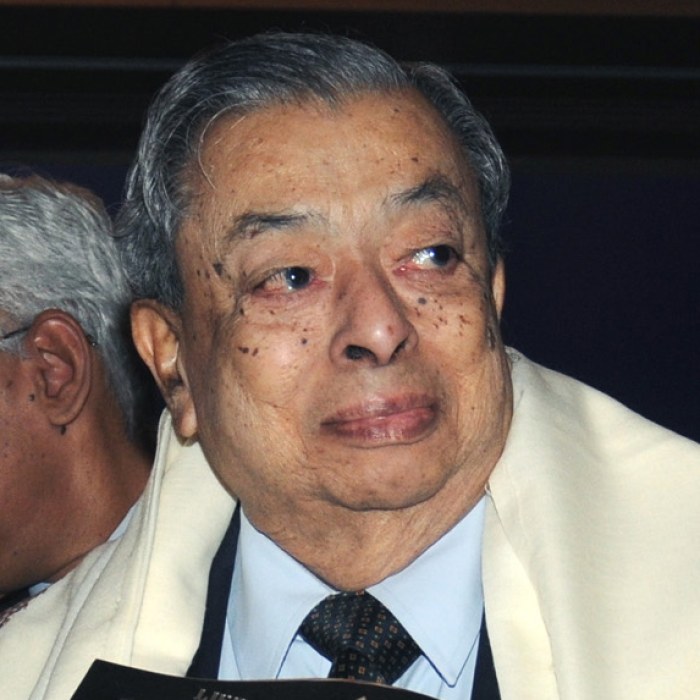
Verghese Kurien
Posted to a dairy job he did not want, he turned India into the world’s largest milk producer
Verghese Kurien was born in 1921 in Calicut, in Kerala, into a Syrian Christian family; his father was a civil surgeon. He studied physics, then mechanical engineering, and won a government scholarship to the United States. He wanted to study metallurgy, and was told the scholarship was for dairy engineering. He took it, learned little about milk at Michigan State, and came home in 1949 owing the government service in return.
They posted him to a research creamery in Anand, a small town in Gujarat, which he found dusty, dull and pointless. He planned to leave as soon as he could. Nearby, a group of farmers led by Tribhuvandas Patel had formed a cooperative to escape the middlemen who took most of the price of their milk, and Patel kept asking Kurien to help them fix their machinery. He did, and by the time his bond was up he had stopped wanting to leave.
The cooperative, under the brand Amul, began paying farmers twice a day for the milk they brought in, whatever their caste or how little they had. With his colleague H. M. Dalaya he found a way to make milk powder from buffalo milk, which the experts said could not be done, so surplus could be stored. Prime Minister Shastri visited in 1964, stayed the night in a village, and asked him to do the same across the country.
The result was Operation Flood, run through the National Dairy Development Board he chaired for 33 years, which linked millions of small farmers into cooperatives. India, once an importer of milk, became the world's largest producer. He refused to take shares in any of it, and died in 2012.