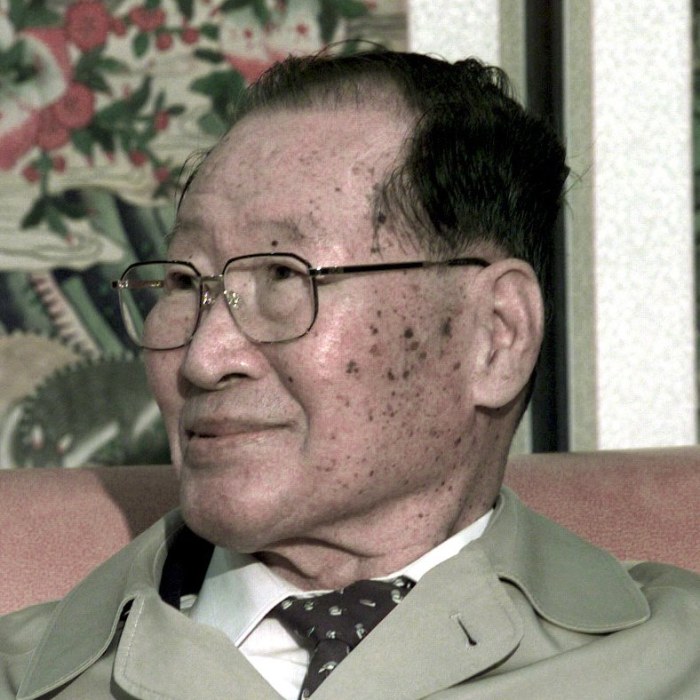
Chung Ju-yung
Ran away from a starving farm four times and built Hyundai, then drove 1,001 cows back to repay his father
Chung Ju-yung was born in 1915 in a village in Kangwon province, now in North Korea, the eldest of eight children of a farmer who could not always feed them. Instead he ran away four times, the last time, in 1933, with money his father had raised by selling a cow. He worked as a railway labourer, a docker, and a delivery boy for a rice shop, whose owner handed it to him when he fell ill. The Japanese authorities closed it in 1939.
He tried car repair, and that was shut too, then in 1947 founded Hyundai Civil Industries, building for the American army. During the Korean War he won a contract to cover a bare cemetery with grass for a visit by President Eisenhower, in winter, and did it by transplanting barley shoots. Afterwards he took the big projects the government wanted: the Seoul to Busan expressway, built in two and a half years, dams and ports across Asia and the Middle East.
In 1971 he decided to build ships. He went to Barclays in London for a loan, showed the bankers a 500-won note with a picture of a sixteenth-century Korean ironclad on it, and then found a Greek owner willing to order two tankers from a yard that did not exist. The ships and the yard at Ulsan were finished together in 1974.
Hyundai cars followed. In 1998, aged 82, he drove across the demilitarised zone into North Korea with 1,001 cattle as a gift to his home village, to settle, he said, the debt of that one cow. He died in 2001.