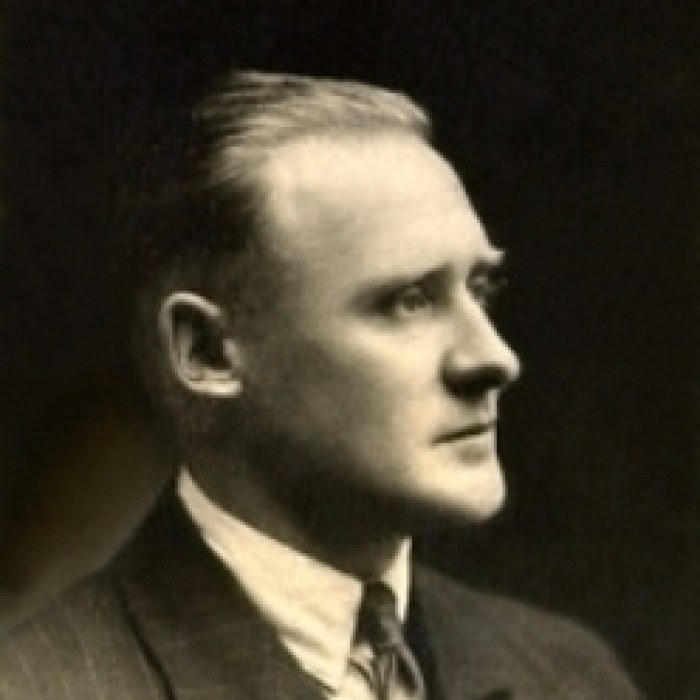
R. J. Mitchell
Designed the Spitfire while dying of cancer and never saw it fight
Reginald Mitchell was born in 1895 in Butt Lane, Staffordshire, the son of a schoolteacher who became a printer. He left school at sixteen for an apprenticeship at a locomotive works in Fenton and studied engineering and mathematics at night school. He tried twice to join the forces in the First World War and was refused because his skills were needed. In 1916 he joined Supermarine, a small seaplane firm in Southampton, and by 1920 was its chief engineer.
He designed flying boats and then the racing seaplanes that won the Schneider Trophy for Britain in 1927, 1929 and, outright, in 1931, when his S.6B also set a world speed record of over 400 miles an hour. The Air Ministry asked for a fighter. His first attempt, the Type 224 of 1934, was slow and ugly, with a fixed undercarriage, and lost the competition.
In 1933 he had been operated on for rectal cancer and given a colostomy. He carried on working. He started again on the fighter as a private venture, with thin elliptical wings and a new Rolls-Royce engine, and the prototype flew on 5 March 1936. Told the company had named it Spitfire, he said it was just the sort of silly name they would choose.
The cancer returned in 1937 and he died in June, aged 42. Some 20,000 Spitfires were built.